
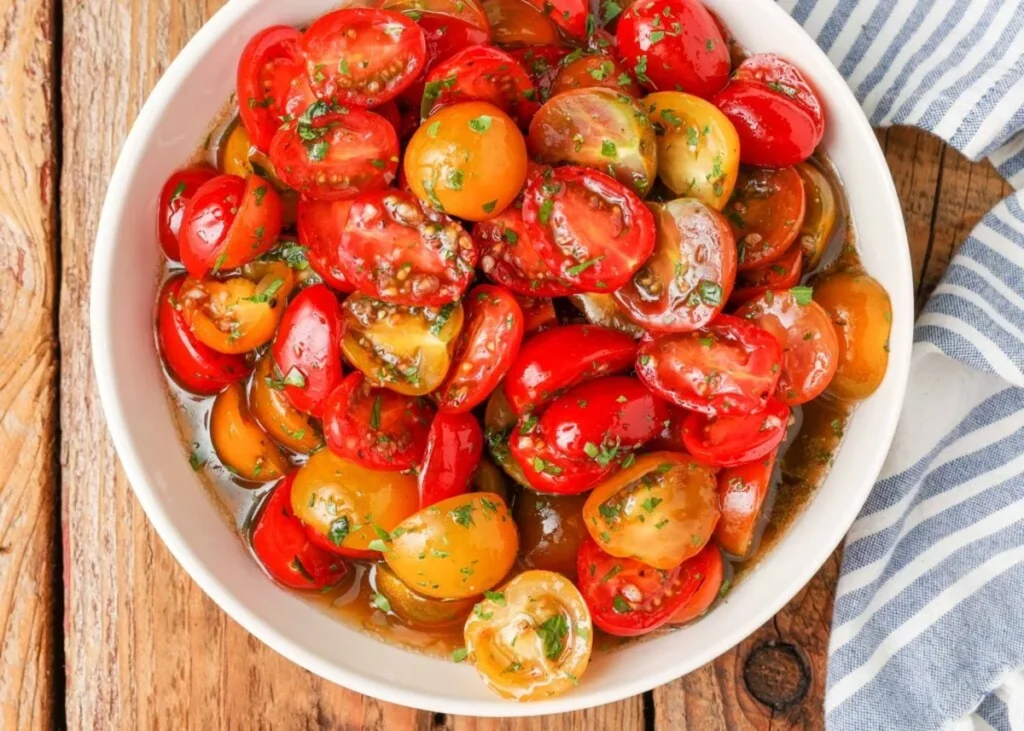
My counter has a leak. Set tomatoes out to marinate and by the afternoon they’re halfway gone, no matter how many times I told myself I was just “stirring to check.” I learned this the hard way with this very recipe. I could not stay out of the bowl on the counter, so I moved it to the fridge. It didn’t help. I was still going back for a taste every time I passed. So, written warning: it really is that good.
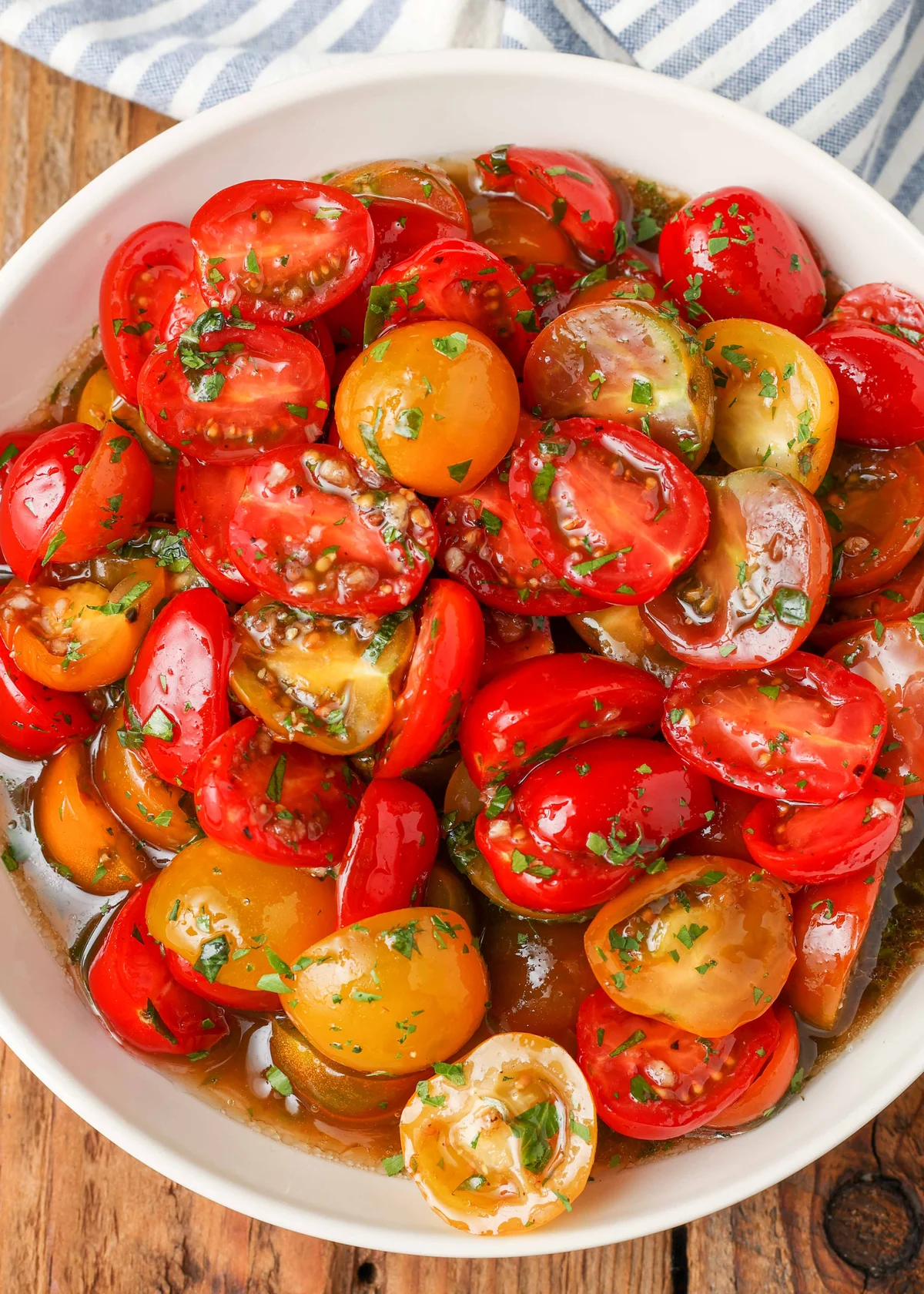
Here’s the promise. This is a tomato side that makes its own dressing. You toss everything together, cover the bowl, and go live your actual evening for a few hours. You come back and find the tomatoes have released enough juice to become a proper savory-sweet marinade on their own. No emulsifying, no pre-cut bouquets, no twenty-ingredient lineup. Just acid, oil, a bit of sugar, garlic, and herbs, and the tomatoes doing their work in the background while you get on with dinner.
Real time: 4 hours (the tomatoes resting, you mostly off duty)
Hands-on: about 10 minutes
Servings: 12 as a side, or fewer if you’re like me and keep sampling the bowl
Ingredients
- 2 pounds tomatoes, halved or cut into 1-inch pieces (about 950 g; cherry, grape, or whatever you have on hand)
- 2 cloves garlic, minced (about 12 g)
- 1/4 cup chopped parsley (about 30 g)
- 10 basil leaves, sliced very thin (about 8 g)
- 2 tablespoons sugar (about 25 g)
- 1 teaspoon kosher salt (about 6 g)
- Freshly cracked black pepper to taste
- 1/8 teaspoon ground thyme (about 1 g or less)
- 1/2 cup extra virgin olive oil (about 118 mL)
- 2 tablespoons balsamic vinegar (about 30 mL)
A few honest substitutions, in case you’re not exactly what the list says.
- Tomatoes. I usually go cherry or grape. But whichever you find at the end of summer, they’ll work. The freshest, ripest ones you can find are the whole point of the recipe. You want tomatoes that smell fragrant, feel heavy for their size, and have taut, unbruised skin. That’s the whole of tomato selection, really.
- Vinegar. Balsamic does the heavy lifting here. It plays with the tomato’s acidity in a good way. If you’re out, a good sherry vinegar or grape vinegar gets you close, just less sweet.
- Sugar. Don’t skip it. This is not a dessert, but a small amount of sweetness rounds out the acid and keeps the bowl from tasting sharp.
- Herbs. The basil is doing the bulk of the flavor work. Parsley adds the earthy note, and thyme rounds it out with a faint minty hint. If you’re short on fresh basil, a good handful of parsley will still get you a solid, if quieter, bowl.
- Garlic. Fresh garlic is the move here. There is no substitute and I will not entertain your garlic powder at this hour.
What you need
- A deep mixing bowl or an airtight container with a lid
- A cutting board and a knife you actually enjoy using. Quality knife makes prep easier. I’ve had mine for over 10 years and it just gets better at its job.
- Measuring spoons, and a garlic press if mincing is fighting you. The press I use is two pieces of stainless steel that click together and pull apart for cleaning. That’s the whole thing, and it makes the whole prep step go much faster.
Method
- Wash the tomatoes and pat them dry with a clean cloth or paper towel. All the cutting you’ll do is halve the tomatoes or cut them into 1-inch pieces, chop the parsley, mince the garlic, and slice the basil very thin.
- If the word chiffonade makes your eye twitch, it isn’t as scary as it sounds. Stack the basil leaves into a neat pile, gently roll it up, and slice the whole pile into thin ribbons. Run a finger through the pile and it falls apart into fine ribbons. That’s the whole trick, and it smells ten times better than hacked basil.
- Put the tomatoes in the bowl. Add the garlic, parsley, and basil. Sprinkle over the sugar, salt, pepper, and thyme. Pour in the olive oil and balsamic.
- Toss everything together until the tomatoes are thoroughly coated.
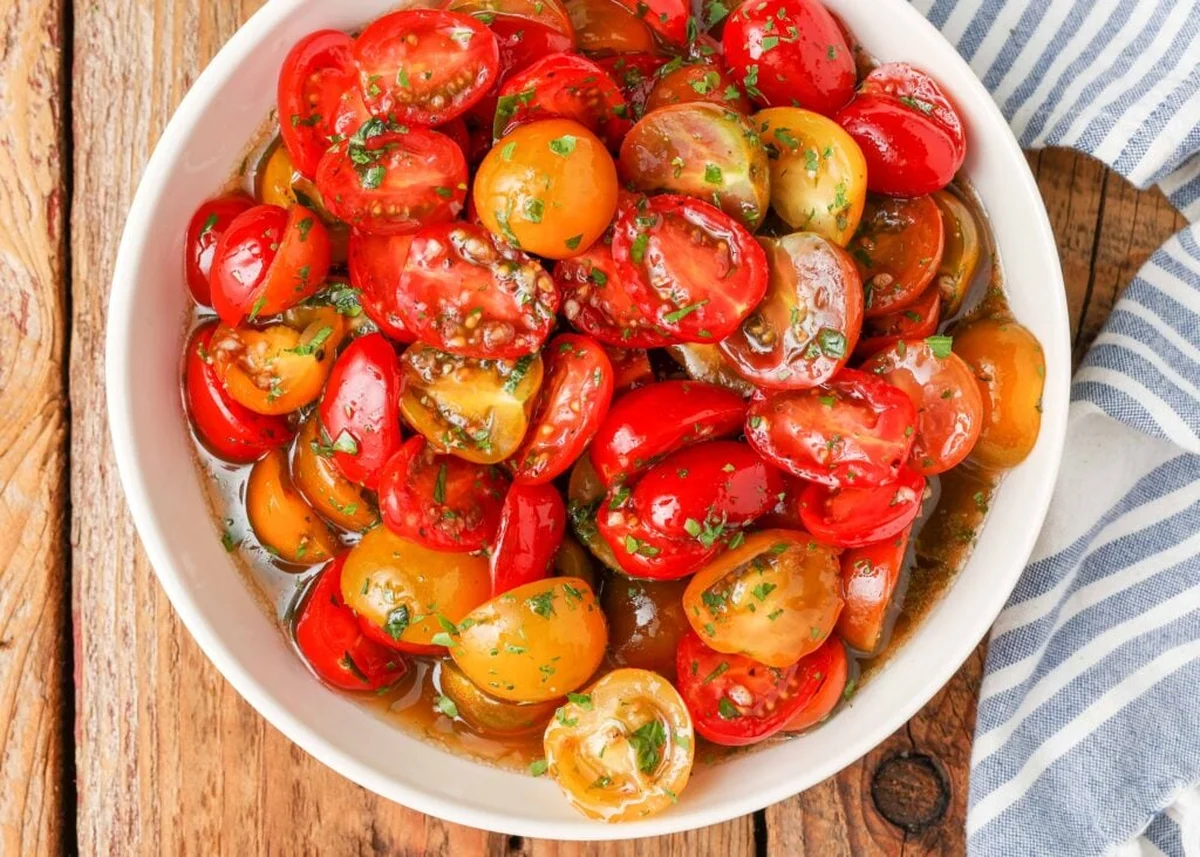
- Cover the bowl and let the tomatoes rest for a few hours. Room temperature or fridge, either works. This is the part where they make their own marinade. You are legally allowed to go back and taste test. You will want to.
- Serve cold or at room temperature, with or without their pool of juice.
What I’ve changed from the first time
- I no longer skip the sweetness. That was always the mistake. A little sugar is what makes the whole bowl taste like it belongs together, not like you just tossed acid at tomatoes. That’s the whole secret of this recipe, I think.
- I chiffonade the basil properly instead of hacking it into the bowl. Takes 30 seconds extra of effort and changes the dish a lot.
- I don’t use canned tomatoes now. I used to, back when I was in a hurry and lazy, and the texture turns out wrong, and they’ve already absorbed all the juice they’re ever going to absorb. Use fresh.
Serve them and use the leftovers
These work as a summer side next to almost anything coming off the stove. I’ve served them next to white fish with a topping of cracked pine nuts on a lighter night, and I’ve used them beside roasted chicken thighs, which is honestly the best combination I’ve settled on. One of the things I actually do is spoon the tomatoes and all the juice over a bowl of plain rice pilaf and let the rice drink up all the leftover tomato liquid. The bowl will not survive the night. It should, though.
Make ahead and storage
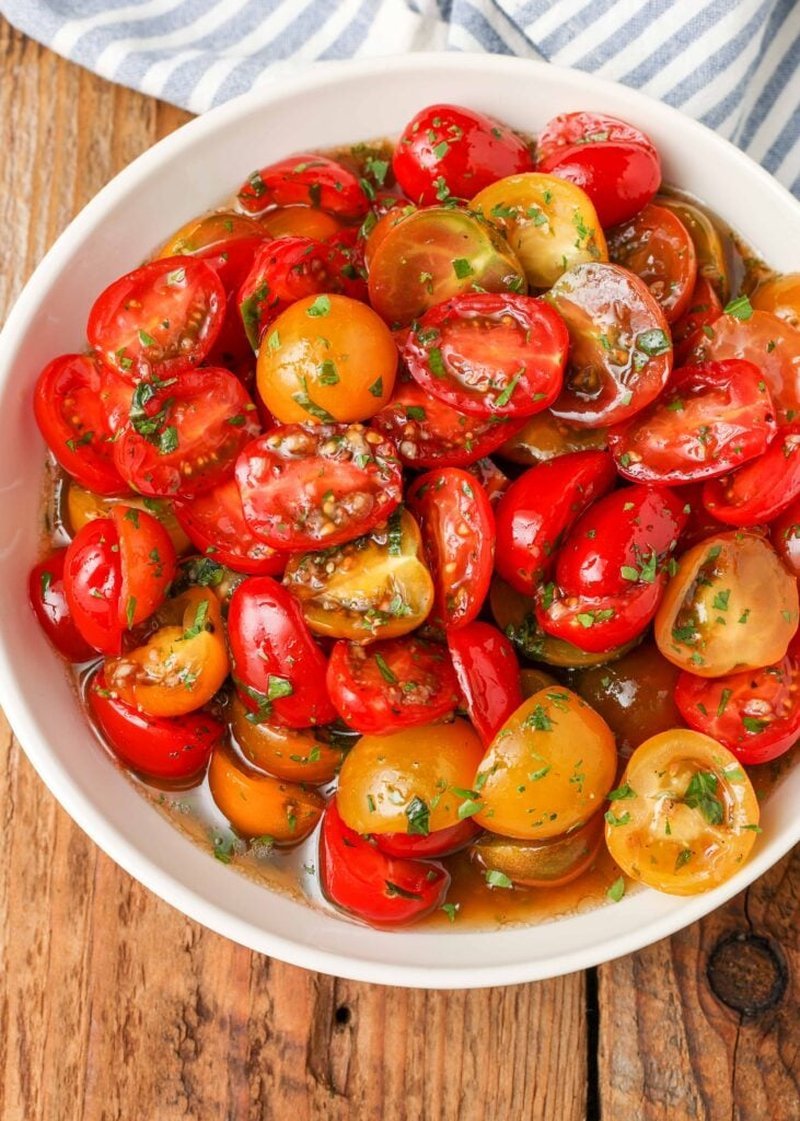
You can prep these in advance. For a marinated dish, you kind of have to. In an airtight jar or container, they’ll keep in the fridge for 3 days. As they rest, they release juice. If you’re serving them as a side on their own, lift them out with a slotted spoon and leave the marinade in the bowl. If you’re using them on a salad or in another dish, don’t throw that pool away. It’s a real salad dressing at this point, built entirely by the tomatoes themselves. That’s the whole food design of this recipe. Use it before you stumble over a sad little jar of leftover juice on the counter.
FAQ
Do I need to seed the tomatoes?
No, you don’t. The seeds will melt into the dressing the way they’re supposed to. Leave them right where they are.
Should I drain the marinade before serving?
Depends on what you’re using them for. If you’re serving them as a side on their own, use a slotted spoon and leave the juice in the bowl. If you’re using them on a salad or in another dish, pour it all in. That’s where you want it.
Can I use canned tomatoes?
No, no. Canned tomatoes have a different texture and have already absorbed all the liquid they’re going to absorb. The point of this recipe is that the tomatoes make their own dressing from the fresh juice, so canned just doesn’t get there.
Make it yours
A few variations I reach for.
- Add a handful of sliced cucumber for a little extra water and crunch. Works well when I’m serving a lot of people.
- Sweeten it with honey instead of sugar for a deeper, less sharp finish.
- Toss it with torn mozzarella for a quick caprese-style starter.
- Marinate enough of it to use as a warm-weather salad alongside sliced sausage or other grilled meat for a summer plate.
I first made these about 15 years ago, right after a friend passed me the recipe, and I’ve adapted it the same way every summer since. This is genuinely what I make when I want a side I don’t have to think about, the kind of thing that disappears from the plate before anyone asks what’s in it.
Happy cooking,
Maya