
The first time I made mapo tofu at home, it was flat. The second time, it was too hot. By the fourth attempt I was standing over the stove with a spoon, wondering why a dish I ordered at takeout a hundred times refused to turn out right in my own kitchen.
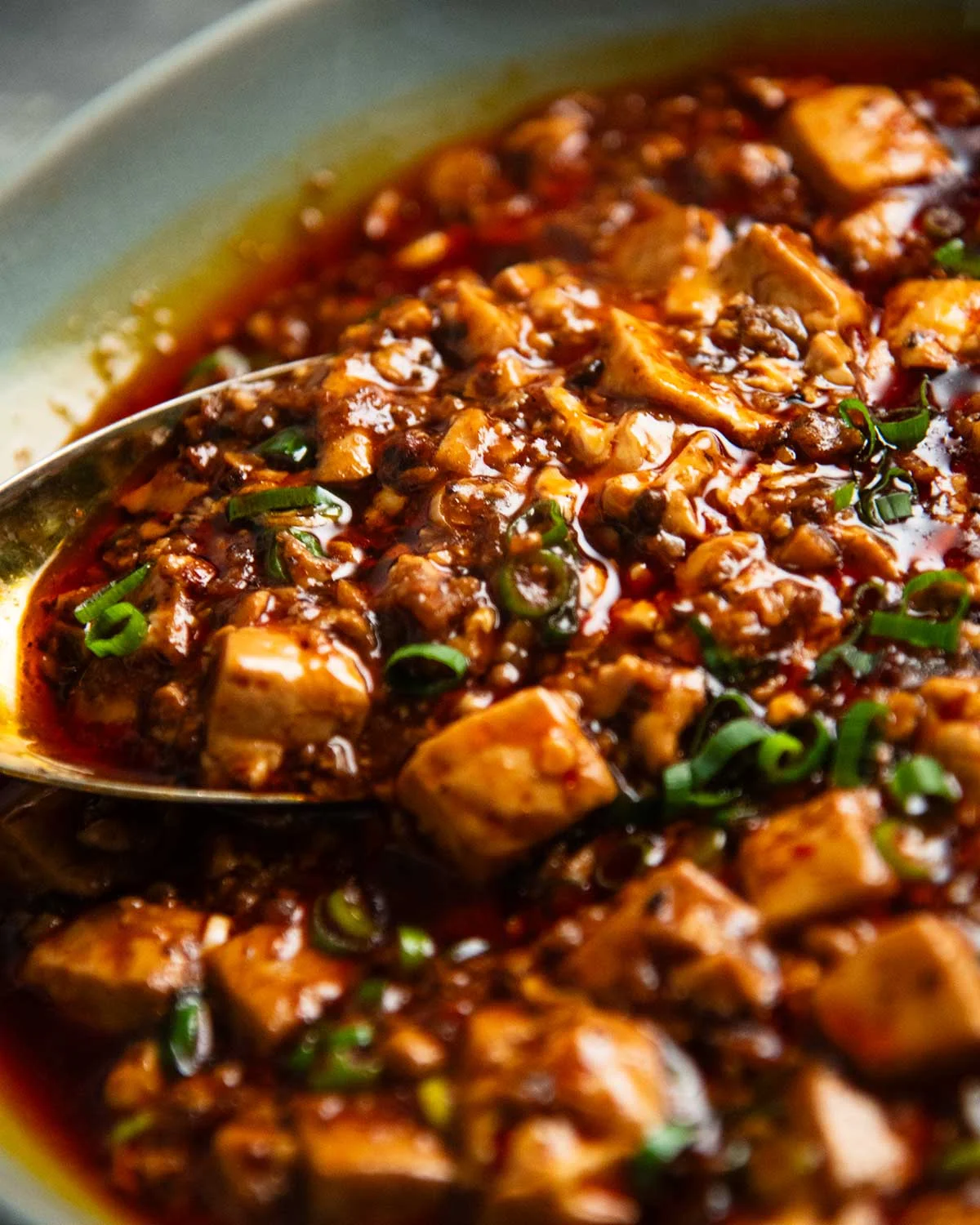
Then I got the pieces I’d been missing, and it all fell into place. Now it’s one of those rare home dinners I can make at 6 pm on a Tuesday and have it on the table by 6:45, and it still tastes like the best version of the thing I grew up craving.
Here’s the honest version: real mapo tofu is silken tofu braised in a sauce built from chilli bean paste, salted black beans, and freshly ground Sichuan pepper. It’s spicy, it’s numbing, and it’s deeply savoury. You’ll need three ingredients from an Asian grocery store, and the rest is pantry stuff you probably already own. Total cost comes to somewhere around $10 for the specialty items, so it’s far cheaper than ordering out.
Real time and effort
Real time: about 45 minutes. Hands-on: about 20. Most of the cooking time is a gentle simmer, so you can be chopping the green onion, setting the table, or dealing with whatever a Tuesday throws at you while the pot does its quiet work.
What you need
The three that take a trip to the Asian store
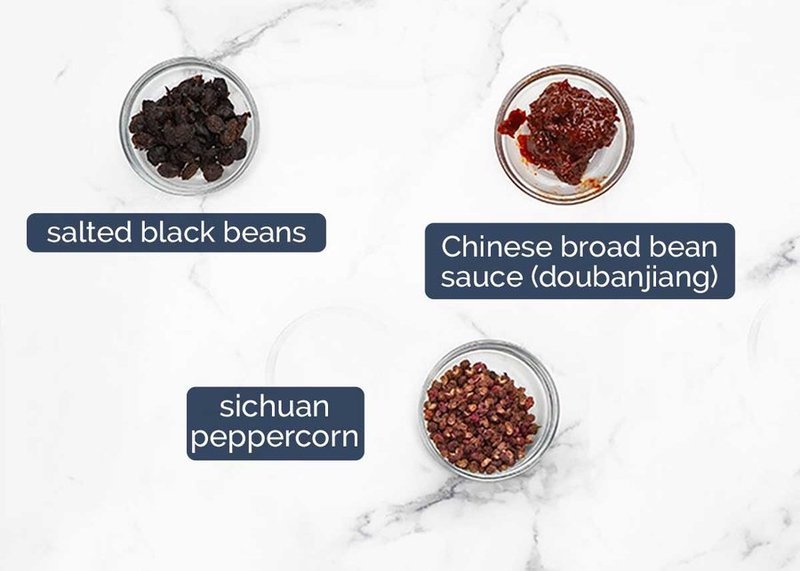
Sichuan peppercorns. This is the one that makes mapo tofu, mapo tofu. That cool, numbing, almost lemony tingle is what separates it from any other spicy dish you’ve had. I use the pink or red ones when I can find them, because that’s the traditional choice and the flavour is a little warmer and rounder. The green ones work too if that’s what’s on the shelf. The other non-negotiable: grind your own. I’ve tried the pre-ground stuff, and it just isn’t there. The flavour is so much fresher and brighter when you toast and grind it yourself, and it takes five minutes. A small packet will last you a long time.
Preserved black beans (also called salted or fermented black beans). They’re actually fermented soybeans, not the legume, and they have the texture of a firm little raisin. They add a deep, savoury saltiness to the sauce that nothing else in the pantry can quite replicate. You’ll find them in the pickled and vacuum-packed vegetable section, and a small pack will go a long way. I can’t think of a substitute that comes close.
Chinese broad bean paste (doubanjiang). A red, fermented paste made from broad beans, soybeans, and salt, often with chilli. It’s savoury, salty, and packed with umami, and it’s the base of the whole sauce. The spicy Sichuan version from Pixian is the one I use. A big jar is a few dollars, and you only need a tablespoon or two per batch, so it’ll sit in your pantry for months.
Everything else
Silken tofu (600g / 21 oz), cut into 1.5cm / 0.6-inch squares. This is the soft, jiggly, jelly-like kind you find in tubs in the refrigerator section. Don’t substitute firm tofu. It’s a tofu dish, not a meat dish, so the right texture is the whole point.
Meat. I use 100g / 3.5 oz of pork mince, ideally with about 20% fat, though lean works fine. Beef is actually the traditional meat and works well too, but I prefer pork because it’s softer and melds more gently with the silken tofu. It sounds like a small amount next to a full block of tofu, but it reads as so much more in the finished dish.
Aromatics and pantry: 2 tablespoons of garlic, finely minced (about 4 large cloves); 2 1/2 tablespoons of ginger, minced with a knife rather than a grater, because grated garlic and ginger get too wet and pasty to sauté properly; 2 teaspoons of pure chilli powder; 1 teaspoon of smoked paprika (or regular sweet paprika if you don’t have the smoked); 1 teaspoon of white sugar; 1 green onion stem, finely sliced; 3/4 cup of low-sodium beef stock; 1 teaspoon of toasted sesame oil (the brown, not the pale yellow, un-toasted kind); 2 teaspoons of cornstarch and 1/4 cup of water for the slurry.
Soys and salt: 1/2 teaspoon of dark soy sauce, 2 teaspoons of light soy sauce in total (1 for the pork, 1 for the sauce), and 1 teaspoon of cooking salt for blanching the tofu. Dark soy is intense, so use light or regular soy if that’s all you have.
Oil: about 1/3 cup of a neutral cooking oil in total. I use canola, but vegetable or peanut oil works. It sounds like a lot, and it is, but that glossy layer of red chilli oil floating on top is a hallmark of good mapo tofu, and you need this much to get it. The finished dish doesn’t feel heavy at all.
How to make it
1. Make fresh Sichuan pepper powder. Toast 1 tablespoon of whole peppercorns in a small dry skillet over medium heat for 2 to 3 minutes, until they smell fragrant and a few of them crack open. Be careful not to let them turn bitter. Let them cool for a few minutes, then grind them as finely as you can in a spice grinder or mortar, and sift out the larger bits of husk. You’ll need about 1 teaspoon of powder for the dish. Set half aside for the finishing sprinkle.
2. Blanch the tofu. This is the step I used to skip, and it’s the one I’ll never skip again. Bring 2 1/2 cups of water to a boil with 1 teaspoon of salt and 1/2 teaspoon of dark soy. Carefully add the tofu, and once it’s simmering, cook for 3 minutes. It removes the raw beany flavour and seasons the inside of the tofu, and it actually makes the silken tofu a little sturdier, which helps later. Lift it out with a slotted spoon into a bowl. Don’t drain it in a colander, you’ll break up too much of it.
3. Make the mapo tofu. If you don’t have a wok, use a medium pot rather than a wide skillet, because you want enough depth for the tofu to braise in the liquid without the sauce evaporating too fast.
Heat 1 tablespoon of oil in the wok over high heat. Add the pork mince and cook, breaking it up as you go, until there’s no more pink, then lower the heat to medium and cook for another 2 minutes until you get some golden bits. Stir in 1 teaspoon of light soy sauce for 5 seconds, then scoop the pork out into a bowl and set aside.
Turn the heat to low and add the rest of the oil. Cook the garlic and ginger for about a minute and a half. Add the chopped preserved black beans and the broad bean paste and cook for 3 minutes, stirring constantly, until it smells incredible. Add the chilli powder and paprika and cook for 30 seconds more. Keep the heat low so the garlic doesn’t burn, and the generous amount of oil helps with that.
Add the beef stock and the remaining teaspoon of light soy. Once it’s bubbling, gently slide in the blanched tofu. Turn the heat up to medium-high until it’s at a steady simmer, then cook for 10 minutes, letting the liquid reduce a little and the tofu soak up the sauce. Gently scrape across the base of the pan with a rubber spatula every now and then so nothing sticks, and don’t stir aggressively, you’ll break the tofu.
Stir in the sugar, the pork, and half of the Sichuan pepper powder. Mix the cornstarch with the 1/4 cup of water and pour the slurry over the surface of the dish rather than dumping it in one spot, then simmer for 2 minutes until the sauce thickens and turns shiny.
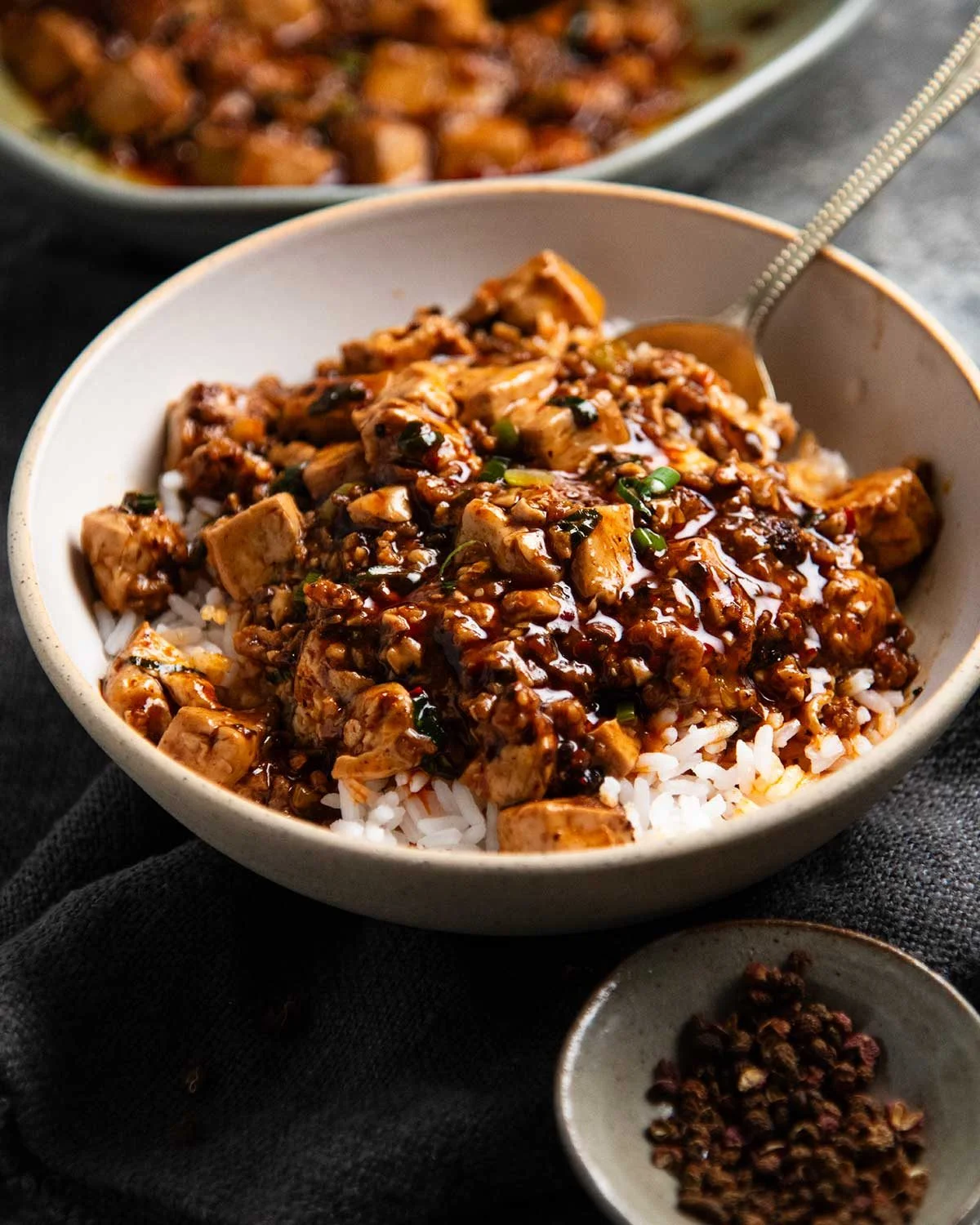
Stir in the green onion and the sesame oil. Pour the whole thing into a serving dish, spooning as little as possible. Sprinkle with the remaining half teaspoon of Sichuan pepper powder, and a little more green onion if you like it. Serve it over rice, and a lot of it.
FAQ
How spicy is it? Spicy, yes, but not Vindaloo-level spicy. The heat comes from the chilli powder, which you can dial back and add more at the end to taste. The Sichuan pepper adds the numbing tingle, not the burn, so I’d keep that at the full amount, it’s a signature flavour and it’s worth it.
Can I make it vegetarian? Yes. Swap the pork for 200g / 7 oz of finely chopped regular mushrooms and use vegetable stock instead of beef stock, then follow the recipe as written. The sauce has enough flavour to carry it.
I can’t find some of the ingredients. Fair warning: the three specialty items are the backbone of the flavour, and there aren’t real substitutes for them. The good news is they’re cheap, they keep well in the pantry (or the freezer), and you only use a little of each batch, so that trip to the Asian store pays for itself over time.
How does it keep? Three to four days in the fridge. It’s best fresh, but leftovers are fine, and a small fresh sprinkle of ground Sichuan pepper on top of the leftovers brings it right back to life. It doesn’t freeze well.
Is it authentic? It’s as close as you can get outside of Sichuan without cooking with caiziyou oil (the roasted rapeseed oil that’s the everyday cooking oil there, and very hard to find elsewhere). The red colour here comes mostly from paprika with chilli powder providing the heat, because chilli powder sold here tends to come in one heat level, and using enough of it for the colour would make this dish un-eatable. If you do have caiziyou oil, go ahead and use it.
Make it yours
If you want it milder, cut the chilli powder in half and add more at the end to taste. Beef instead of pork if that’s what you’ve got, and lean pork works fine if 20% fat isn’t on the shelf. Add a splash of the blanching water to the sauce if it starts to reduce too much, and don’t be afraid of a little extra green onion on top. And whatever you do, serve it with rice, this is a saucy dish, and the sauce soaking into the rice is half the point.
Happy cooking,
Maya