
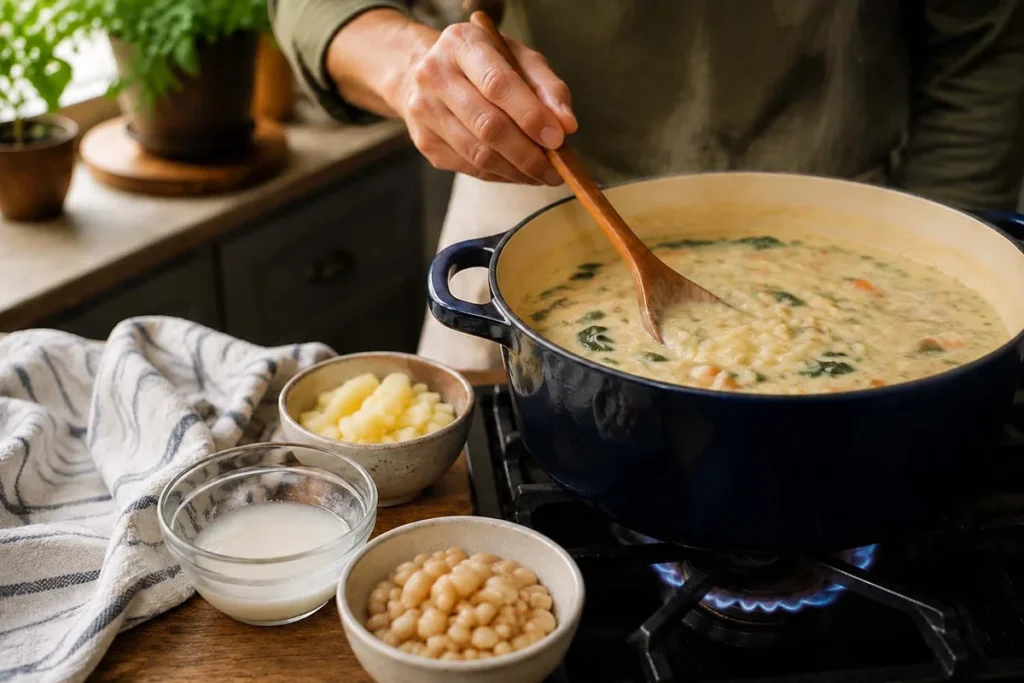
I’m halfway through a pot of soup — the lid is off, the spoon is going in — and it’s thin. Not the kind of thin that’s a choice; the kind that makes you stare at the pot like it owes you an explanation.

The cream carton is empty. Or maybe you’re doing dairy-free on purpose and it never showed up in the first place. Either way, you’re standing there with a spoon and a problem. Here’s what I keep on this list, and why each one exists.
Cream does two different jobs in soup at the same time. It thickens the liquid with its fat — heavy cream runs about 36 percent milkfat — and it coats everything in that rich, velvety mouthfeel. A starch can make soup thick. A puree can make it thick. But only the fat-based ones bring back the richness. So the first question isn’t what to add. It’s which job is your soup actually missing?
This list answers that. Ten fixes, organized by what they do best, with the exact ratio for each one. You’ll find the right one in a few seconds, print this page, and it’ll be on the pantry door for the next thin soup.
How this list works
Each entry is one thickener, one line of why it works, and the ratio to use. The sections are grouped by the job the thickener does — not by ingredient type — so you can jump straight to what your soup needs. Ratios are per quart of soup unless noted otherwise.
Fast neutral fixes
These thicken quickly without changing the flavor. Use them when the soup just needs body.
Cornstarch slurry — the fastest fix in the list. Whisk 1 tablespoon cornstarch with 1 tablespoon cold water, stir it into the simmering soup, and pull it off the heat once it thickens. Don’t boil it hard — extended heat breaks the starch down and it thins out again. Best for clear broths, Asian-style soups, and a quick weeknight rescue.
Roux — 1 tablespoon butter and 1 tablespoon flour cooked together, whisked until smooth, then stirred gradually into the soup. Takes a few extra minutes on the stove and constant attention, but it removes the raw flour taste a slurry leaves behind and adds a nutty depth if you cook it toward golden or brown. Best for chowders, gumbo, and French-style soups.
Simmering uncovered — no ingredient at all. Just take the lid off and let the water evaporate. This takes longer — often 20 to 40 minutes depending on the volume — but it concentrates flavor along with texture and adds nothing new to the pot. Good when you’re not in a hurry and the soup needs both body and a deeper taste.
What’s already in the pot
These use the ingredients already simmering in the soup. No separate addition needed — you’re just concentrating what’s there.
Pureed vegetables — blend 1 to 2 cups of the soup’s own cooked vegetables back into the pot. It thickens the liquid and deepens the vegetable flavor already in there instead of masking it with something new. Roast the vegetables first if you want more depth. Blend in batches and vent the lid so hot liquid doesn’t splatter. Best for vegetable soups, chowders, and blended soups.
Potato — dice 1 medium potato and simmer it directly in the soup, then mash it or partially puree it right in the pot. The starch releases as it cooks, so no separate thickener is needed. Mash by hand for a chunky, homestyle texture. Don’t overblend — potatoes turn gluey if pureed too long. Best for chowders and rustic vegetable soups.
Rice — ¼ cup rice per quart, simmered until soft, then blend some or all of it back in. Short-grain or medium-grain rice releases more starch than long-grain, which is why classic chicken and rice soups lean on it. Blend just a portion for a thick soup that still has texture, or blend it all for something silky. Best for chicken soup and creamy vegetable soups.
Oats — ¼ cup rolled oats per quart, simmered at least 10 minutes until soft, then blend or leave as is for a heartier bowl. Naturally gluten-free, so it’s a useful swap if you’re avoiding gluten without reaching for a specialty starch. Best for vegetable soups, tomato soup, and gluten-free cooking.
Protein-rich thickeners
These add both body and protein. Good when you want the soup to be filling as well as thick.
White bean puree — 1 cup of pureed cannellini beans, chickpeas, or great northern beans per quart. Beans blend smoother than most vegetables because there’s almost no fiber structure left to break down, so the soup comes out silky rather than grainy. Rinse canned beans first to cut the sodium. Best for minestrone, tomato soup, chili, and vegan soups.
Silken tofu — ½ cup blended with a splash of the soup’s own hot broth, per quart. Almost no flavor of its own, so it disappears into whatever you blend it with and adds a real dose of protein without introducing any coconut or nutty note. Use silken or soft tofu, not firm. Best for creamy vegetable soups and dairy-free soups where you want no coconut or nut flavor.
Richness, not just thickness
These bring back the fat-coated mouthfeel that cream provides. Use them when the soup needs to feel indulgent again, not just thicker.
Coconut milk — ½ to 1 cup canned full-fat coconut milk per quart, stirred in near the end of cooking. This is the closest dairy-free match to what cream actually does, because it brings back real fat and richness, not just body. The carton beverage sold near the dairy aisle is mostly water and won’t thicken anything. Prolonged heat can cause the fat to separate, so add it late. Best for Thai curries, coconut-based soups, and dairy-free bisques.
Tempered egg yolks — 2 egg yolks per quart, whisked with a ladle of hot broth before stirring back into the pot. This is the same technique behind avgolemono and classic veloutés. Tempering isn’t optional — adding raw yolks straight into a hot pot scrambles them. Keep the heat low after adding and don’t let the soup return to a boil. Best for veloutés, avgolemono, and velvety vegetable soups.
How to use it this week
- Stock the basics first: cornstarch, a can of white beans, a carton of eggs, and a can of full-fat coconut milk. That covers most of this list.
- When the soup is thin, decide which job it’s missing — body or richness — before you reach for anything. That takes ten seconds and saves you a second pot.
- If you’re doing a batch of soup for the freezer, thicken it before it cools down. Slurries and rouxs work better while the soup is still hot.
- Season again after thickening. Texture changes how salt reads on the tongue, so taste before you serve.
Make it yours
Swap short-grain rice for arborio if you want a risotto-style texture in the chicken soup. Use half-and-half plus a small cornstarch slurry if you want a little richness without the full fat load of heavy cream — the milk adds flavor but very little thickening on its own. For a tomato soup that needs something with a bit of body, soak a slice of stale bread in warm broth until soft, blend it in, and you’ve got a traditional panade that uses up bread that would otherwise go stale.
FAQ
Why did my soup turn out gummy or gluey? Overblending starchy ingredients like potatoes or oats releases too much starch too fast. Pulse just until smooth instead of running the blender continuously, and avoid a high-speed blender on straight potatoes.
Can I thicken soup without adding any ingredient at all? Yes. Simmer it uncovered and let the water evaporate. It takes longer — often 20 to 40 minutes — but it concentrates both flavor and texture without adding anything new.
What’s the difference between a roux and a slurry? A roux is flour cooked in fat first, then simmered into the soup. A slurry is starch mixed with cold liquid and stirred directly into hot soup. The slurry is faster; the roux adds more flavor.
Can I use avocado to thicken soup? Blend a quarter to a half of a ripe avocado with some broth for a mild, creamy thickness. Add it close to serving, since prolonged heat turns it an unappetizing grey.
Happy cooking, Maya.
1 Comment