

My first kimchi jar sat on the counter like a science experiment I’d set up and was too proud to walk away from. I checked it every single day, watching the cabbage soften, the paste darken, the liquid start to bubble. It didn’t last a week — we ate it all, and then I was sad it was gone.
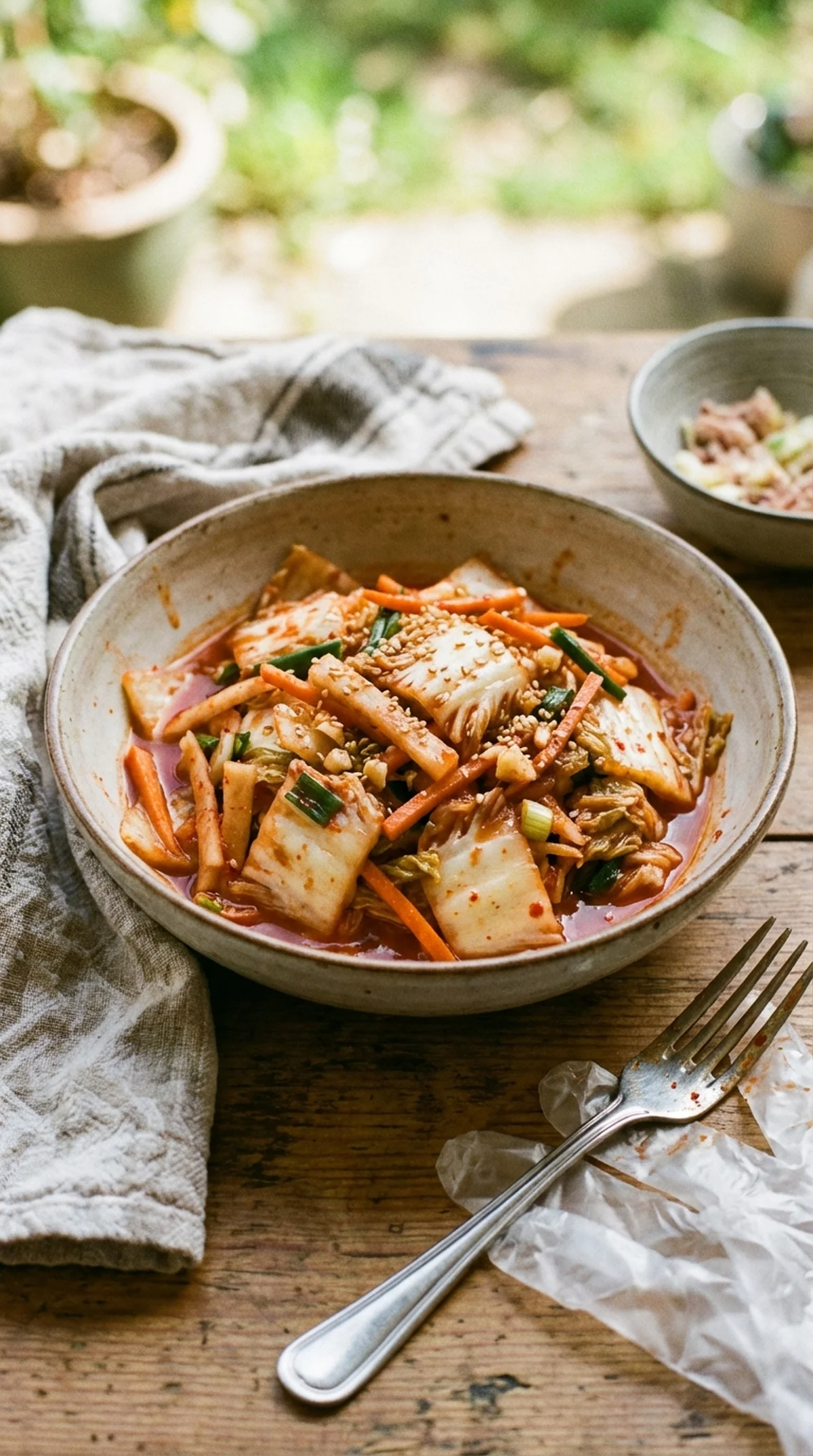
This list gets you from an empty counter to a sealed jar of kimchi in one sitting. Thirty minutes of prep, a couple of days of waiting, and a jar that keeps giving you a side dish for weeks. Print it, stick it on the fridge door, and go.
How this list works
Everything you need to make one batch of baechu kimchi, grouped by where it lives in your kitchen. The numbers are from the original recipe — I haven’t changed a single one. Assumes you’re feeding four, making one full jar.
The Cabbage
One Napa cabbage — the main event. Cut in half, core removed, then sliced into two-inch chunks before salting.
3 tablespoons coarse salt — rubbed between the leaves to draw out water and wilt the cabbage. Leave it to sit for at least two hours.
Non-chlorinated water — for rinsing the cabbage and mixing the sauce. Chlorine can slow fermentation. If you only have tap water, let it sit out for a day or use filtered.
The Paste
6 dried red chili peppers — soaked in water to soften, then blended into the sauce. They give kimchi its heat and that deep red colour.
2 cloves garlic — minced. No shortcuts here; raw garlic is what gives kimchi its bite.
Half a cup (118 ml) medium onion — chopped rough and blended with the rice into a smooth base. Use white or yellow.
2 tablespoons cooked white or brown rice — blended into the sauce. It thickens things up and feeds the fermentation. Any rice works, even the day-old leftovers.
Half a cup (118 ml) water, split — a quarter cup for the rice-onion blend, the other quarter cup when you add the peppers. Add more if you need to reach one cup of sauce total.
2 tablespoons jeotgal (Korean fermented fish sauce) — this is the savoury, umami backbone of the whole thing. Salt alone can’t do what it does. Available at Korean grocery stores. If you can’t find it, substitute 1 tablespoon soy sauce and 1 teaspoon anchovy paste.
2 tablespoons gochujang (red pepper paste) — sweet, spicy, and thick. It rounds out the chilli heat and adds depth. Not the same as regular gochujang from the jar — this is the paste, not the sauce.
1 tablespoon sugar — a little sweetness to balance the salt and heat. You can adjust this up or down to taste.
1 tablespoon sesame seeds — stirred in at the end. They add a toasty, nutty finish.
1 pair plastic gloves — the recipe says so for a reason. Chilli paste stains your hands red, and if you’ve got any cuts, it burns.
The Vegetables
Half a cup (118 ml) carrot — peeled and sliced into matchsticks. They add crunch and a little sweetness.
A small piece of Korean radish — sliced into matchsticks alongside the carrot. If you can’t find Korean radish, regular daikon works.
3 or 4 spring onions — cut into two-inch strips. They add a fresh, sharp note that keeps the kimchi bright.
How to use it this week
- Buy the Napa cabbage first — it’s the one item you’re most likely to forget, and it needs to be fresh. Check the leaves; they should be firm and bright, not limp.
- Soak the dried chilli peppers in water as soon as you get home. They need time to soften, so start that before you do anything else.
- Do the salting step first and set the cabbage aside. You’ve got at least two hours, so that’s your window to chop the vegetables and blend the sauce.
- Mix the paste into the cabbage and press it down lightly in the jar. Let it sit at room temperature for 1–24 hours, then pop it in the fridge.
Make it yours
Prefer it milder? Use 4 of the chilli peppers instead of 6, or skip the gochujang entirely. Want it spicier? Add an extra pepper and a teaspoon more gochujang. Swap the sugar for a drizzle of honey if you want a different kind of sweetness. For two people instead of four, halve everything — the fermentation still works in a smaller jar.
FAQ
What is jeotgal? Korean fermented fish sauce. It adds a savoury, umami depth that salt alone can’t provide. Regular fish sauce works as a substitute, though the flavour is slightly different.
How long does kimchi need to ferment? One to two days at room temperature to get started, then it goes in the fridge. It’s edible after a few days but keeps developing flavour for one to four weeks. Some people like it fresh and mild, others prefer it aged and sour.
How do I know if the fermentation is working? You’ll see small bubbles in the liquid after a day or two, and the kimchi will taste slightly tangy and fizzy. If it smells off or you see mould on the surface, discard it and start over.
How long does it keep? In an airtight container in the fridge, up to two weeks for optimal flavour and texture. After that it keeps getting more sour — which some people love.
Happy cooking, Maya.