
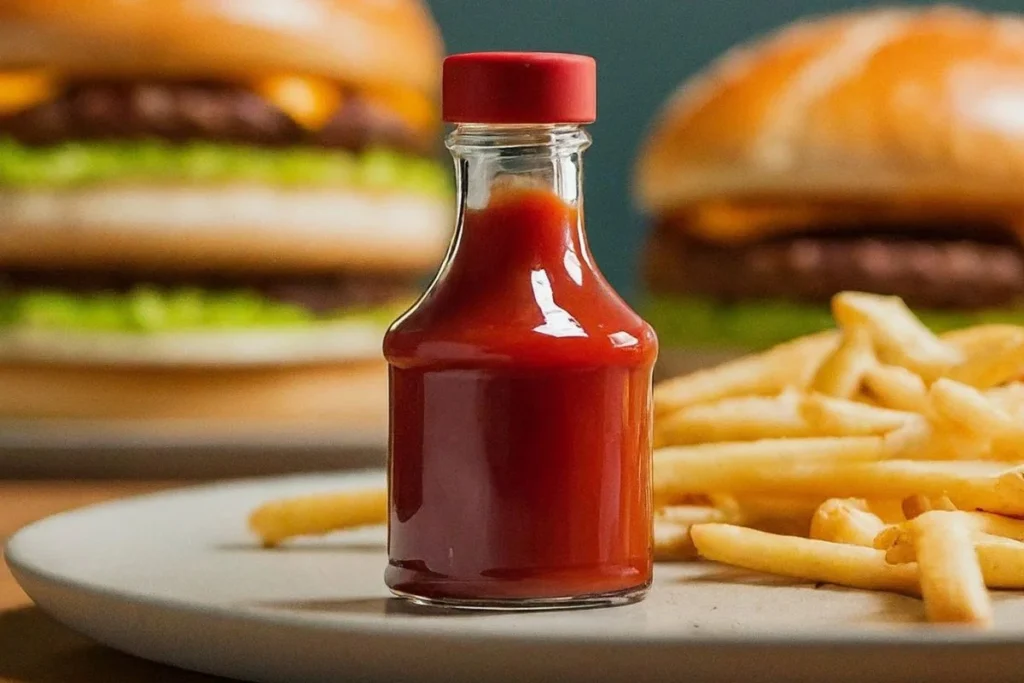
My husband found the ketchup bottle we’d been using all summer last weekend — cap on, sitting in the back of the fridge, no one had touched it in months. We both stared at it the way you stare at a takeout container you can’t decide to throw out. That’s what this list is for: open the page, find your exact situation, and know in under two minutes what to do with the bottle.
Does ketchup go bad? Yes, eventually. But the window is longer than most people think, and storage changes it more than anything else. Unopened, it keeps about a year in the pantry, per Heinz’s own guidance. Once opened, expect peak flavor for about a month at room temperature, or up to 6 months in the fridge, per USDA-sourced guidance. Past that, it’s usually flat and separated — not dangerous — as long as none of the real spoilage signs below are showing.
How this list works
One page, five sections: every storage window for unopened, opened, and frozen ketchup; the signs that separate normal aging from a real toss; storage habits that stretch the good window; and four quick answers to the questions people actually ask. Two assumptions: a standard commercial bottle, and a normal home kitchen.
Every shelf life, at a glance
The full set of numbers, so you never have to scroll past the rest of the page to answer “can I still use this.”
- Unopened, pantry — about 1 year past purchase, per Heinz’s guidance; a cool shelf away from the stove, no fridge needed.
- Opened, pantry — about 1 month for best quality; fine to eat past that, but flavor fades fast.
- Opened, refrigerated — up to 6 months for best quality, the window both Heinz and USDA-sourced guidance point to.
- Safety vs. quality — per USDA, opened ketchup stays safe even unrefrigerated; the fridge is a quality upgrade, not a safety requirement.
- Ketchup packets, unopened — several months at room temperature before they fade.
- Ketchup packets, opened — 1 to 2 months refrigerated, but honestly use them right away; they don’t reseal.
- Frozen — safe indefinitely, though the texture turns watery after thawing.
- Biggest real risk — not the clock: mold or yeast growth from a contaminated bottle.
The four signs that mean toss it
Most of what ketchup does with age is harmless. The difference between “stir it up and keep it” and “down the bin” is these four things — any one of them means throw the bottle out rather than scooping around a spot.
- Visible mold — even a small fuzzy patch means contamination took hold; don’t save the rest.
- Sour or off smell — ketchup’s normal aroma is tangy-sweet; anything sharper or funkier is your cue.
- Bubbles or fizzing — tiny bubbles mean yeast fermentation has started, usually from a dirty utensil dipped in repeatedly.
- Sharply sour taste — a mellowed, flat flavor is normal aging; a taste that’s gone sharply sour is not.
Not on that list? Separation into a watery top layer, a slightly darker or duller red, and faded flavor are all normal quality changes, not spoilage. A shake or a stir brings most of it back.
Storage habits that stretch the good window
The windows above assume decent storage. These are the few habits that actually move the needle.
- Unopened: cool pantry, not the fridge door — keep it away from the stove and direct sunlight; refrigerating an unopened bottle is fine but unnecessary.
- Opened: back of a fridge shelf — not the door, which swings to room temperature every time you open it; the shelf holds a steadier chill.
- Reseal the cap tightly after each use — every open minute is air contact, and air is what fades the flavor.
- Use a clean utensil, or squeeze from the bottle — the dirty-spoon route is how yeast sneaks into an otherwise perfect bottle.
- Sugar-free and organic variants: lean short — they skip some of the sugar or stabilizers that help conventional ketchup resist spoilage, so refrigerate promptly and stay toward the shorter end of the windows.
- Freezing is the endgame, not the default — if a big bulk bottle is fading and you can’t use it up, freezing keeps it safe indefinitely; just expect a watery texture and a vigorous shake or stir after thawing.
Quick answers
- Does ketchup need to be refrigerated? Not for safety — USDA guidance says opened ketchup stays safe at room temperature, and Heinz calls it naturally shelf-stable. The fridge slows flavor fading and separation, which is why it’s still worth doing.
- Is it safe past the best-by date? Usually yes, if there’s no mold, off smell, or fermented taste. The date marks peak quality, not a hard cutoff — judge it by smell and look once opened.
- Why is there watery liquid on top? Normal separation, not spoilage. Shake or stir the bottle before using and it recombines.
- Can you freeze it? Yes — safe indefinitely in the freezer. The texture suffers; thawed ketchup turns watery, so plan on a good shake or stir afterward.
How to use it this week
- Audit the fridge door and the pantry today — two minutes, every bottle gets a look and a sniff.
- Moved opened bottles to the back of a shelf, caps tight, before the next big cook.
- Keep one clean spoon or squeeze-from-the-bottle rule for anything you’re not using up this week.
- Save freezing for bulk bottles you know you’ll run out of time on.
Make it yours
Swap in sugar-free or organic? Keep the same storage, just lean toward the shorter end of every window and watch the smell more carefully. Running a household of one instead of two? The month-in-the-pantry window will likely outlast your bottle anyway — the fridge still wins for flavor.
Not professional food-safety advice — when in doubt, and the bottle shows any sign from the list above, the bin is the safe answer.
Happy cooking, Maya.