
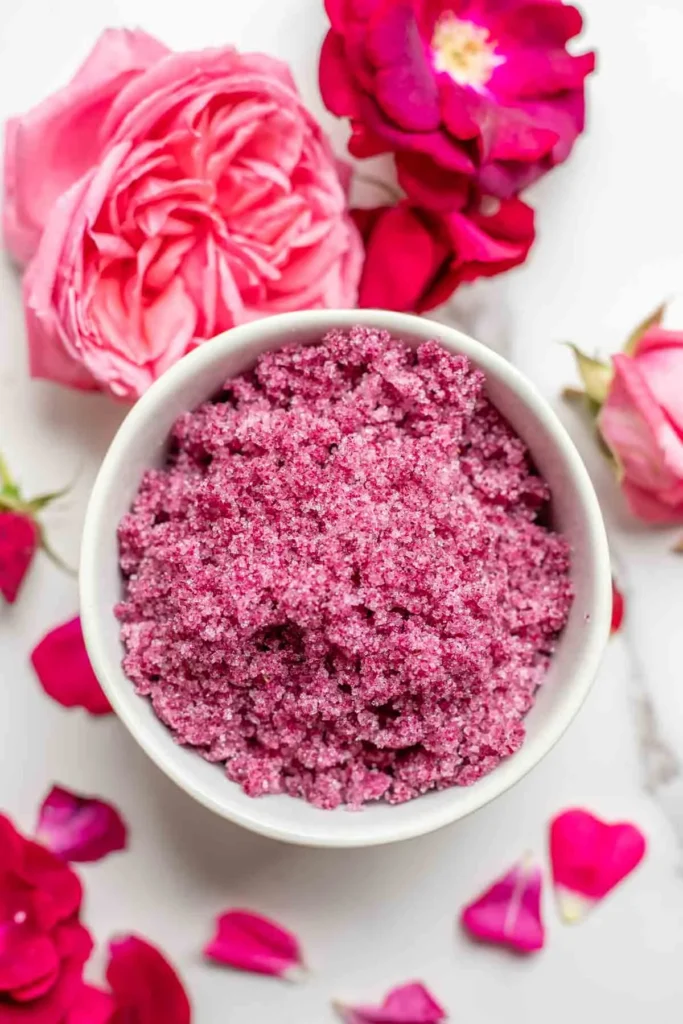
My husband came home from work one evening and asked if I had any of the pink sugar, like the fancy kind. I had exactly one jar left, and we were going to use it on the daughter’s birthday cake that weekend. By the time we’d popped the lid, I’d already counted the days until we ran out — about nine. I’d been short on that sugar ever since I stopped buying it, so I figured there had to be a way to keep my counters stocked.
There is, and it’s one of the laziest crafts in my whole kitchen: rose sugar. You need one cup of sugar, one cup of petals, and five minutes of hands-on time. The hard part is deciding what to put it near on Sunday mornings.
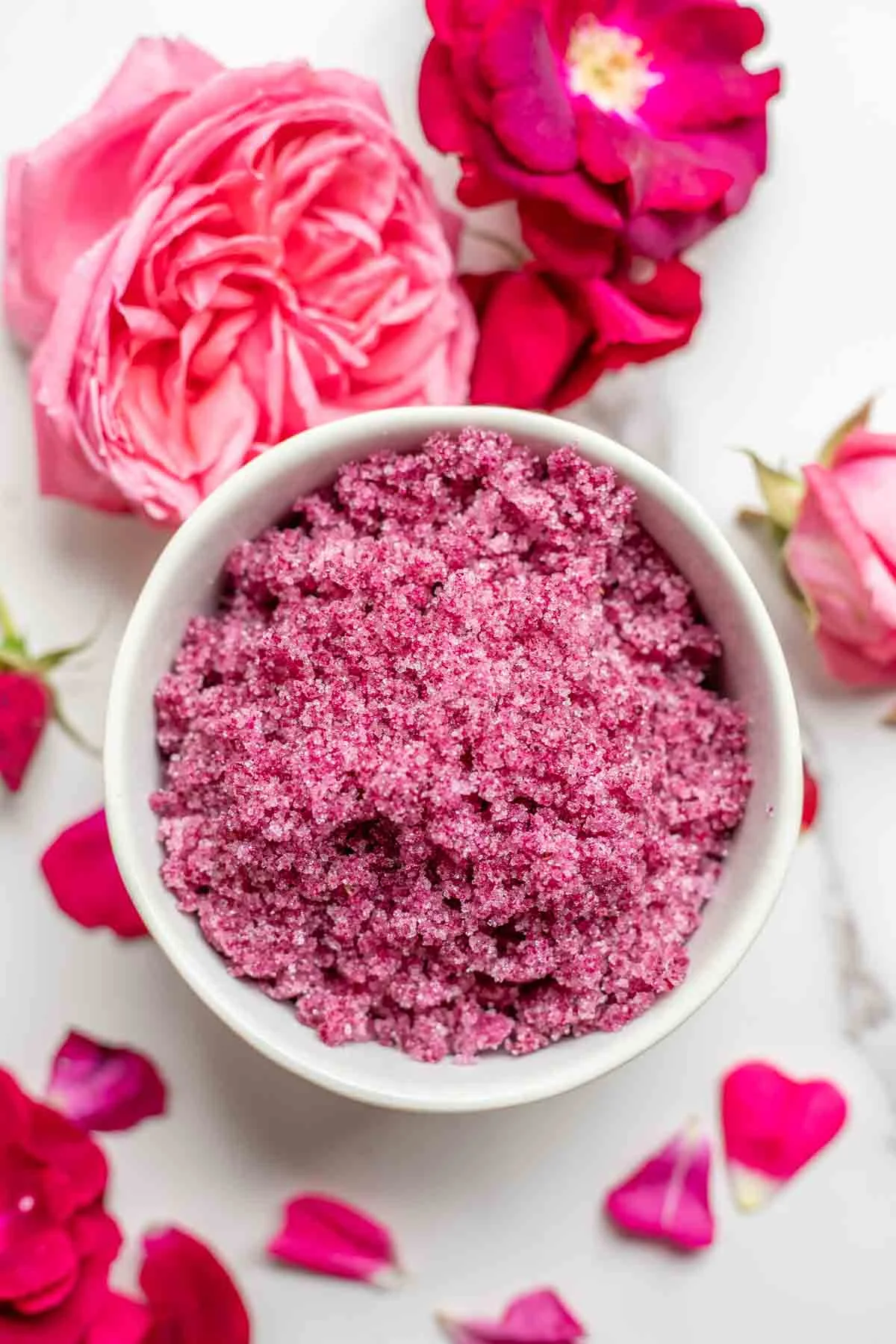
Why you’d want this in your pantry
Rose sugar has no business being this good in iced tea, but it is. The same spoonful goes on top of sugar cookies, into whip, over sliced fruit on a hot afternoon, or straight into your coffee if you want a small reason to slow down. It’s the kind of thing that makes a normal Tuesday breakfast feel a little intentional.
I never would have thought to put rose petals in sugar — I’ve mostly eaten them as a garnish on the side of a plate. But the smell you get while grinding is floral, not flowery-in-a-boulet way, and it carries into everything it touches. The history backs it up: a 16th-century English writer and gardener named Sir Hugh Platt is credited with the first known rose sugar, which makes this a 450+ year old idea hanging out in your pantry. No resources, no specialty store run.
Real time and effort
- Hands-on: about 5 minutes for the dry-grind method
- Total with drying: a few days spread on a baking sheet, stirred now and then
- Infusion method: a couple of weeks sitting in a jar, untouched
- Shelf life: six months or longer, airtight, in the pantry or freezer
What you need
Two ingredients and tools you already have because you bake things on weekends.
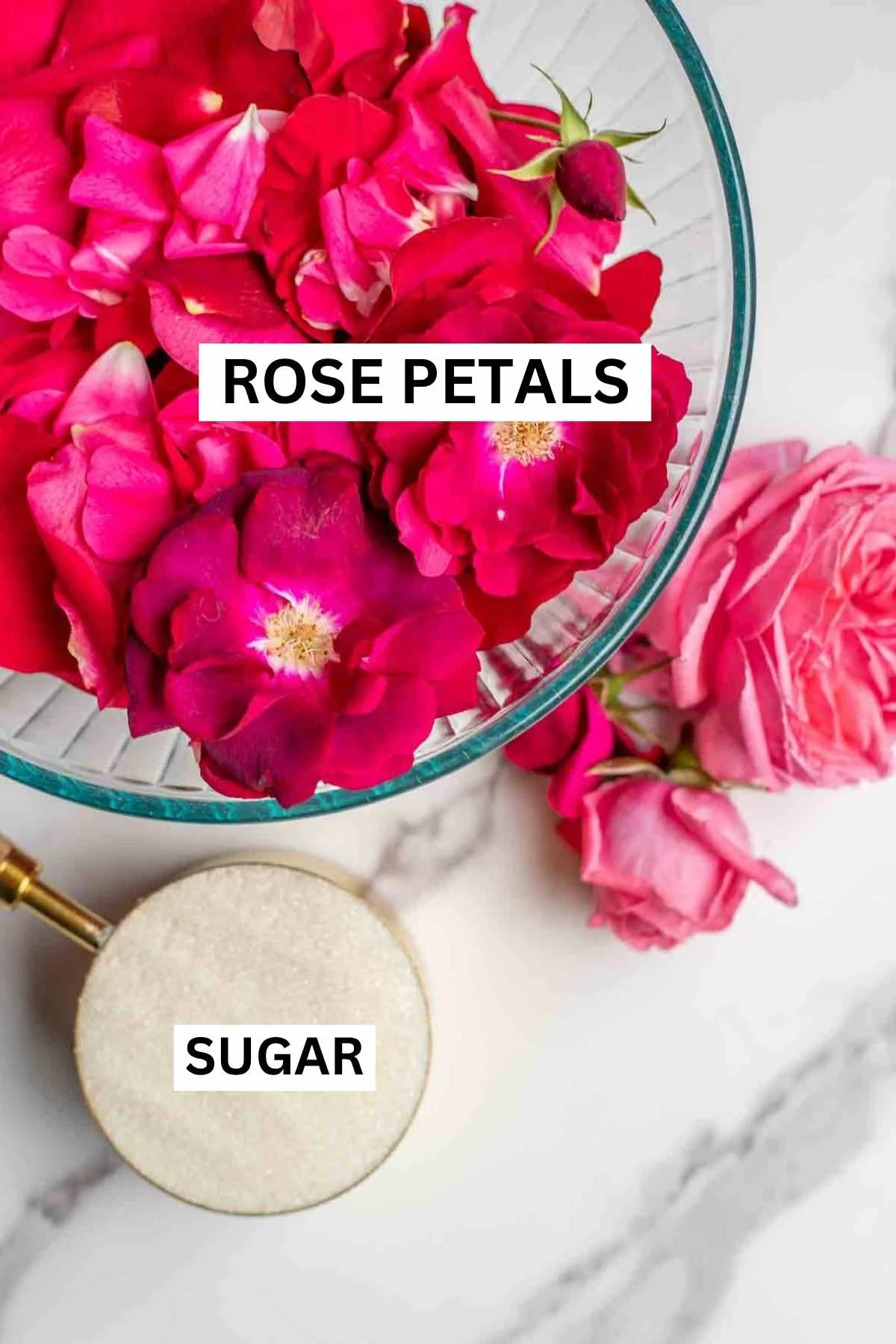
- 1 cup (about 200 g) sugar — I use organic cane
- 1 cup fresh rose petals, tightly packed (about 60 g) — see the tip on fresh vs. dried
- Tools: a food processor, blender, or coffee grinder (the grinder works great for smaller batches); a baking sheet; a glass jar with a lid; a sifter, if you have one
The petals are the only picky part here. Go organic if you can, skip anything that’s been sprayed, and do a quick shake to make sure bugs aren’t having a party in the heads of the roses before the food processor gets there. I haven’t hit this in my garden, but I learned about it the first year I made this and I’m not doing it again. Mix color and variety — dark pink and red petals give you a much prettier result than white roses, which have a bad habit of going brown as they dry.
How to make rose sugar (the fast way)
- Drop the sugar and petals into a food processor or blender. Half the batch? A coffee grinder handles it fine.
- Pulse until the petals are ground to a fine, even consistency. You want the blend to look and feel like sugar, not sawdust.
- Spread it on a parchment-lined baking sheet and leave it for a few days to dry out. I drape a sheet of parchment over the top so nothing stray — dust, drips, the occasional sticky toddler hand — lands in it. Stir it now and then.
- Pour into a jar. Done. That’s the recipe.
Or: the slow way (infusion)
If you’ve got a weekend to spare — or a garden that’s producing more roses than you know what to do with — skip the blade entirely. Layer sugar and petals in a clean glass jar, alternating until you run out, and let it sit for a couple of weeks. The sugar will slowly draw the rose oil out of the petals on its own, no mechanical help needed. When it’s done, sift the petals out and you’ve got the same sugar, just gentler and slightly deeper in flavor.
The down side: you’re committing to that jar for a couple of weeks and you have to remember it’s in the cupboard.
Storage (don’t skip the freezer)
The pretty pink color fades once the sugar dries out. Freezing your jars is the trick I run now — the color holds noticeably better, and honestly, an airtight jar in the freezer is no different from one on the shelf by this point. As long as the petals are fully dried out, this sugar will keep for six months or longer in the pantry or freezer.
Tips from my counter
- Fresh vs. dried petals. Both work. Fresh petals give stronger aroma and infuse faster; dried petals are convenient but take much, much longer, because the oils seep into the sugar at a crawl once the petals are already dry. I use fresh every time.
- Wash if needed, dry completely. If you’re not growing your own, some petals may need a quick rinse. They have to be totally dry before you start, or you’ll be making wet sand instead of sugar.
- Bright petals, pretty sugar. Deep pink and red roses hold their color. White roses most likely turn brown as they dry, so save the whites for your vase.
What I actually use it on
- Stir it into iced tea or a green tea latte — it works in hot coffee too, if you’re brave.
- Roll it on shortbread cookies before baking, or dust it on top of freshly baked sugar cookies for a little something.
- Sub it for white sugar in any baking recipe where you want a hint of floral behind the sweetness.
- Sprinkle it over a bowl of fresh fruit on a hot day — berries especially.
- Stir it into whip or homemade yogurt before serving.
- Sixin it on top of scones or muffins while they’re still warm.
- Use it in a sugar scrub for the body — the residual scent is surprisingly nice and it feels like a spa step without being one.
FAQs
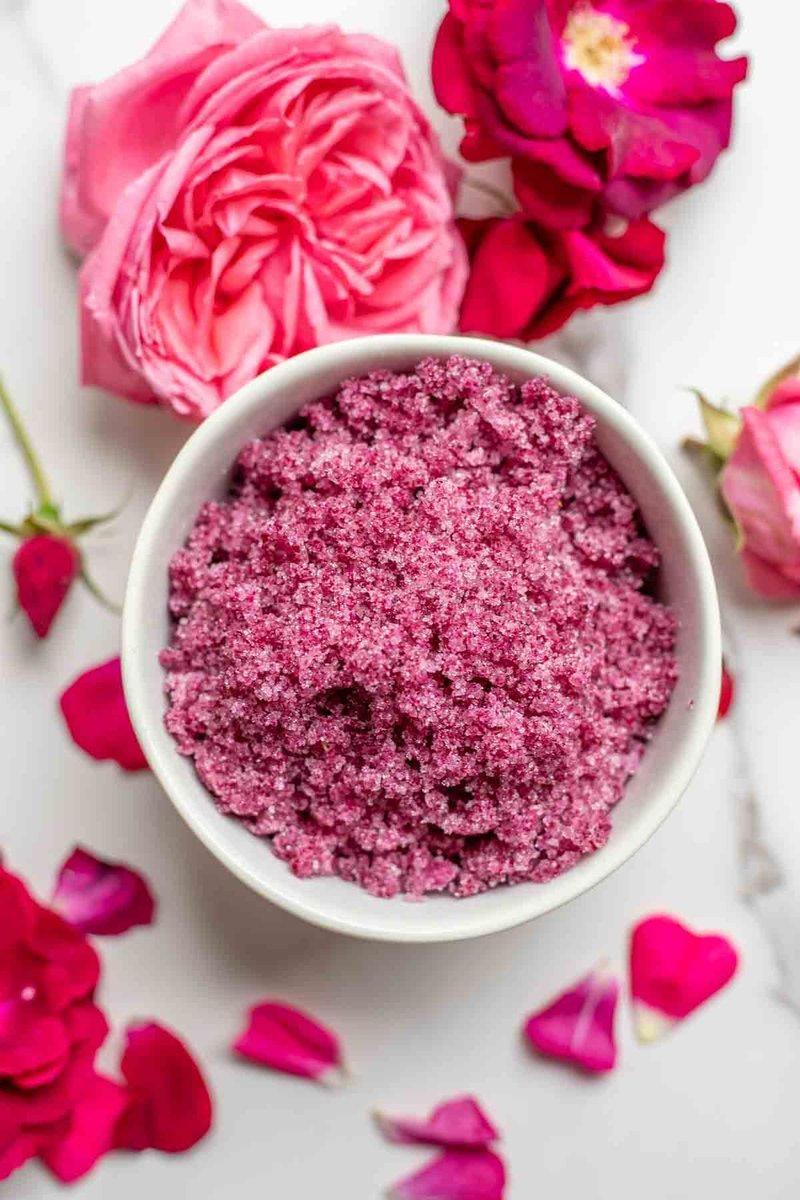
What does rose sugar taste like? Sweet and delicate. It has that rose flavor of a fresh petal without getting perfumey, so you’re not tasting it as perfume.
Fresh or dried petals? Both work. Fresh gives stronger aroma and infuses faster; dried is fuss-free but the flavor takes a lot longer to build up.
Which roses should I use? Edible, pesticide-free rose petals only. Heirloom varieties like the Apothecary rose have stronger scent and flavor, so reach for those first.
Can I use the whole flower or the rose hips? Just the petals. Leave the hips for tea.
Can I do this with other edible flowers and herbs? Absolutely. Same instructions — blend and dry, or layer and infuse — and swap out whatever you have fresh in season:
Make it yours: grind the sugar after petals so you can check the consistency and stop before it goes to powder. Or make a batch in your driest season and jar it for winter, when the counter could use something pretty. Or mix your rose sugar with a little ground vanilla and keep a jar for the year’s plum — the two flavors were made for each other.
Happy cooking,
Maya