
There’s a moment every summer, maybe the second or third warm evening in a row, when the grill stops being a project and just becomes a tool. Something is on the coals, the neighbors can smell it, and dinner takes itself.
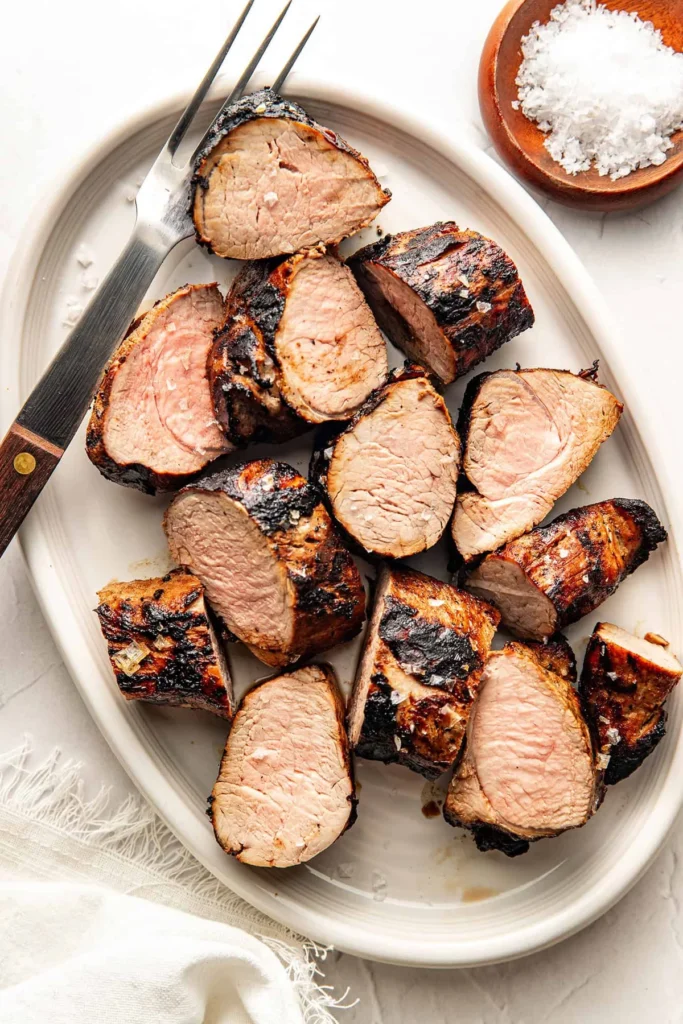
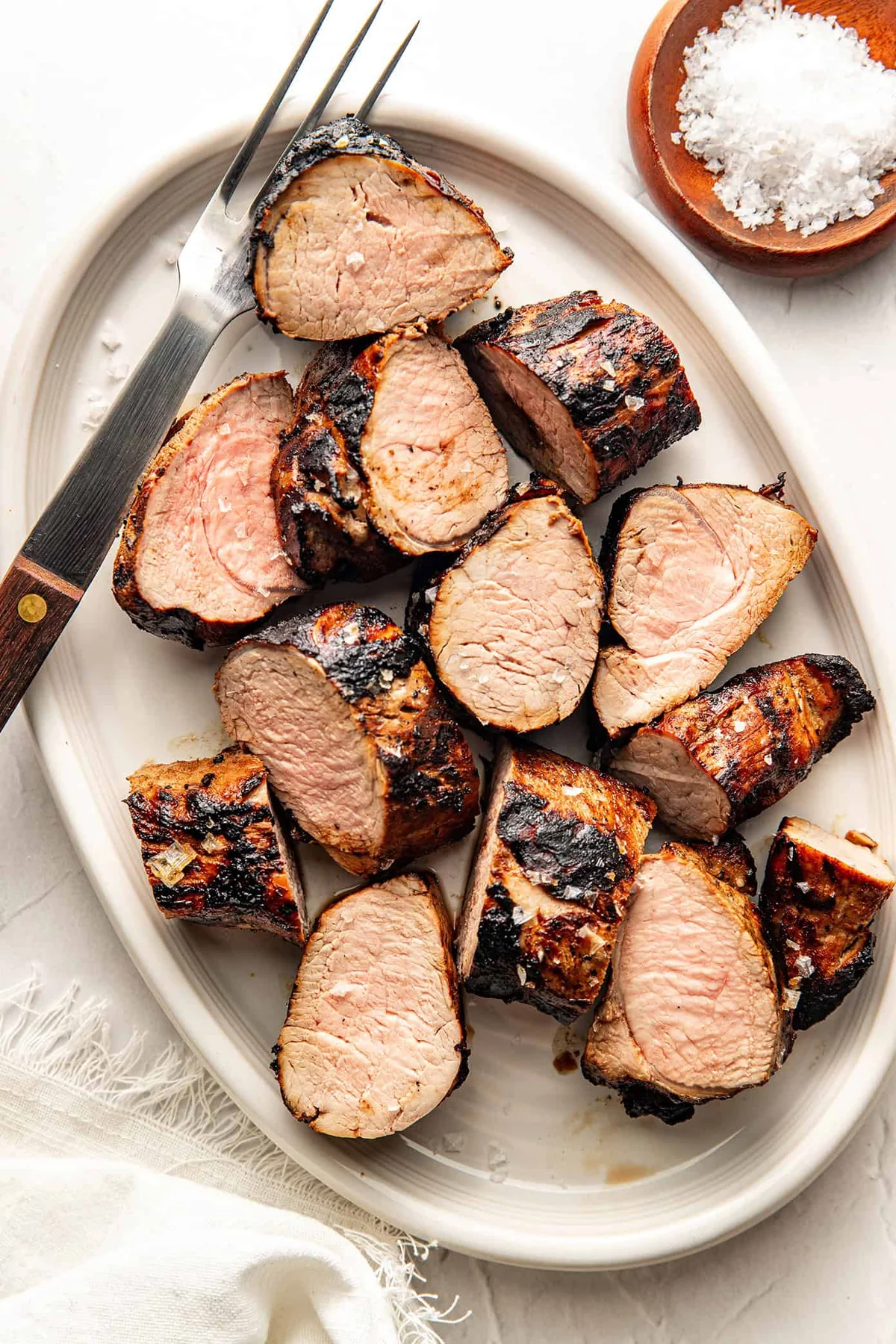
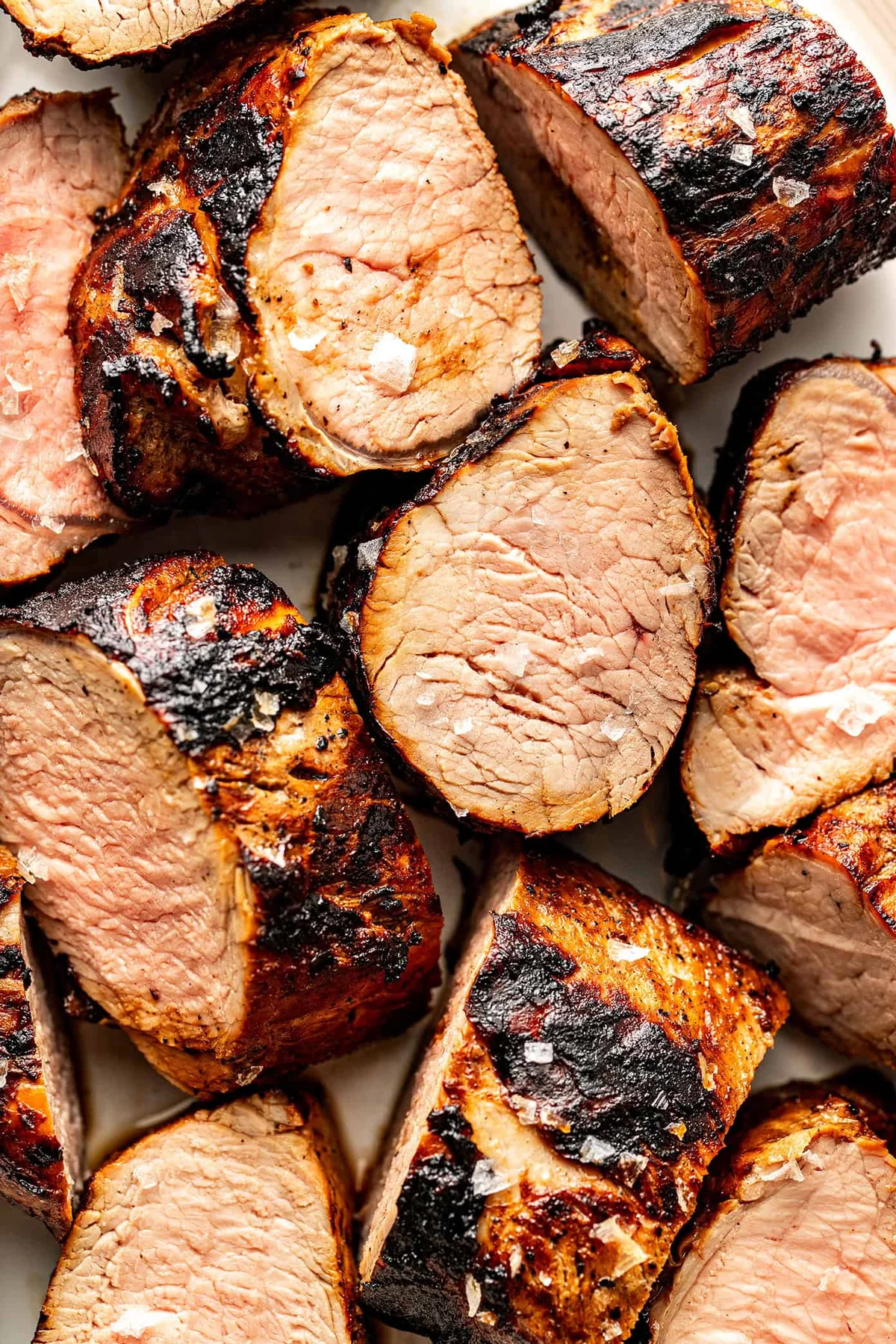
That’s when pork tenderloin earns its place. It’s one of those cheap, lean cuts that never gets a fair look — until it’s on your plate with real charred, caramelized edges and a flavor that makes people ask what you did to it. Nothing heroic, I promise. Thirty minutes of marinating and a bare handful of ingredients are all it takes.
Real time: 55 minutes, barely. Hands-on: about 15. The rest is the grill doing its job and the meat resting on a cutting board while the rest of the table settles.
The marinade that made me stop looking
All summer I’ve been testing marinades, and this one is the one that stuck. Olive oil, low-sodium soy sauce, Dijon mustard, honey, lemon juice, pressed garlic, salt, pepper, smoked paprika. That’s the whole list, and it lands in a way none of the single-note rubs seem to: savory, tangy, garlicky, lightly smoky, just a little sweet. Finish the sliced pork with flaky sea salt and you’re done. No glaze, no basting rounds, no plating ceremony.
It works as a quiet Tuesday dinner and it works as the thing I bring out when friends show up to the patio. That’s the bar I actually hold dinner to.
What you’ll need
- 2 pork tenderloins, about 2 pounds total
- 1/3 cup olive oil
- 1/3 cup low-sodium soy sauce
- 2 tablespoons Dijon mustard
- 2 tablespoons honey or maple syrup
- 2 tablespoons freshly squeezed lemon or lime juice
- 4 large cloves garlic, pressed or finely minced
- 1 teaspoon fine sea salt
- 1 teaspoon freshly ground black pepper
- 1 teaspoon smoked paprika
- Flaky sea salt for the top
That’s it. If you only keep one pantry staple for grilling season, let it be a good Dijon and a bottle of the low-sodium soy. Everything else grows in a yard or lives in the produce aisle.
How to cook it, start to platter
- Make the marinade. Whisk the olive oil, soy sauce, Dijon, honey, lemon juice, garlic, salt, pepper, and smoked paprika together in a medium bowl.
- Marinate. Put the tenderloins in a zip-top bag or shallow dish, pour the marinade over, and turn to coat. Seal it and refrigerate for at least 30 minutes, up to 8 hours.
- Heat the grill. Get it to medium-high, around 400°F (about 205°C), and wipe the grates clean before oiling them.
- Grill. Pat off the excess marinade and discard the rest. Set the pork on the grill and cook 12 to 16 minutes total, turning every 3 to 4 minutes, until all sides are browned and the thickest part reads 145°F (63°C) on an instant-read thermometer.
- Rest, slice, serve. Move the pork to a clean board and let it sit 5 to 10 minutes. Slice across the grain, sprinkle with flaky sea salt, and serve while it’s still warm.
Tips that keep it tender
- Use tenderloin, not loin. They sound alike and they aren’t. Tenderloin is long, narrow, and fast. Loin is a bigger cut with a totally different cook time, and one where you’ll end up with dry meat if you follow this recipe.
- Trim the silver skin. That thin silvery membrane on one side is tough and chewy. Slide a sharp knife under it and peel it off before marinating. Takes a minute, saves the whole dish.
- Don’t over-marinate. Thirty minutes is plenty; a full night (up to 8 hours) is fine. Past that, the citrus starts turning the texture mealy, and you lose the snap you want in a lean cut.
- Trust the thermometer, not the eye. 145°F (63°C) at the thickest part is done, and a faint blush in the center is fine. It’s the only real defense against gray, dry pork.
- Take 10 minutes for the rest. The juice will actually settle back into the meat. It’s the difference between a slice that sparks and one that soaks the board.
- Slice against the grain. Run your finger along the fibers to find their direction, then cut across. Each bite comes out noticeably more tender.
Make it yours
The marinade is built to be played with, so match it to whatever you’re serving:
- Stir in chopped rosemary, thyme, oregano, cilantro, or parsley for a fresher note.
- Add crushed red pepper, cayenne, sriracha, or a spoonful of harissa if you want heat.
- Swap the lemon or lime for orange juice, if your table likes a sweeter, softer citrus.
- Add a tablespoon more honey or maple syrup for a stickier, more caramelized finish.
- Go deeper on the smoke: chipotle powder in place of the smoked paprika, or a spoon of adobo sauce from a can of chipotles.
- Serve with chimichurri, tzatziki, pineapple salsa, green goddess dressing, or a two-minute garlic yogurt sauce.
What to put on the table
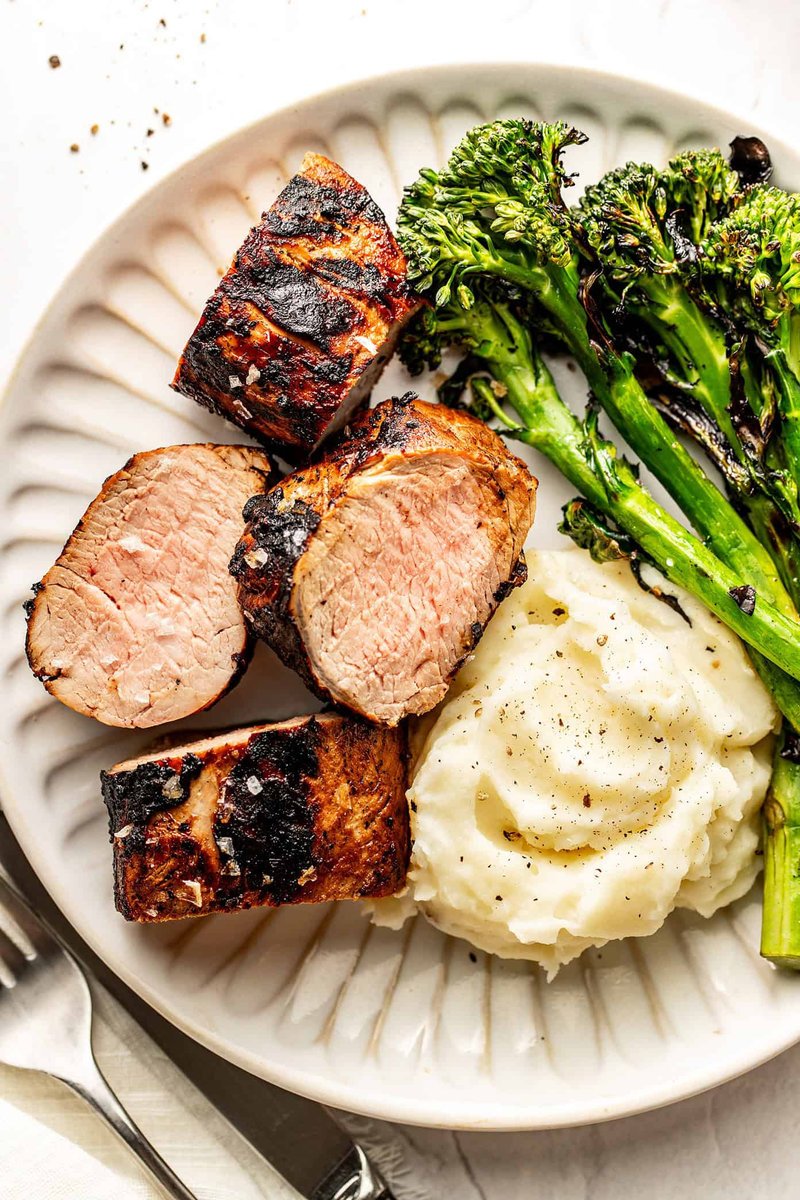
This pork is a blank check for the rest of the plate. Grilled vegetables are obvious and correct. A colossal batch of mashed potatoes makes it a proper holiday-style Sunday. If it’s hot enough that a cold side makes sense, a chopped salad or a bowl of straight fruit does the job.
Questions people actually ask
What temperature should pork tenderloin be cooked to? 145°F (63°C), measured at the thickest part. A little color in the center is fine and keeps it juicy — pull it the second the thermometer reads 145.
Can I make it without a grill? Yes. Sear the pork in an oven-safe skillet over medium-high, then finish it in a 400°F (205°C) oven until the thickest part reaches 145°F (63°C). A grill pan on the stovetop works the same way.
Can I use this marinade on anything else? Easily. It’s tuned for chicken, shrimp, salmon, and steak, and it’s even decent on a firm tofu. Just shorten the marinating time for the lighter proteins and let the cook time do what it does.
The good news about an honest, fast piece of meat is that it gives you back your evening. The grill handles the cooking, the marinade handles the flavor, and you get to actually be at the table for it.
Happy cooking,
Maya