
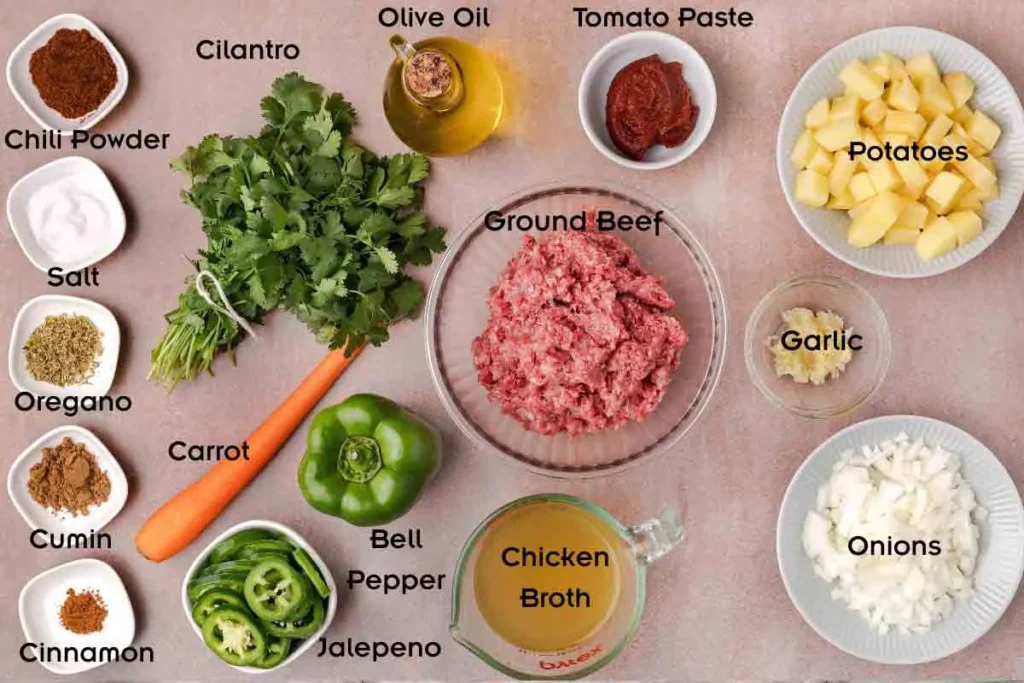
There’s a pot of rice doing its quiet thing in the corner of the kitchen, and the clock says 5:40. By the time everyone’s home, there’s a skillet of picadillo on the table, and nobody’s stressed. That’s the version of this dish I’m after.
Full honesty: the first three times I made picadillo, it was a mess. Burnt garlic, a pan too small, and a ‘sauce’ that was basically soup. It took a few tries and a lot of patience to get it right. Now it’s one of the most reliable things in my rotation, because it does a lot of heavy lifting for a very small amount of effort.
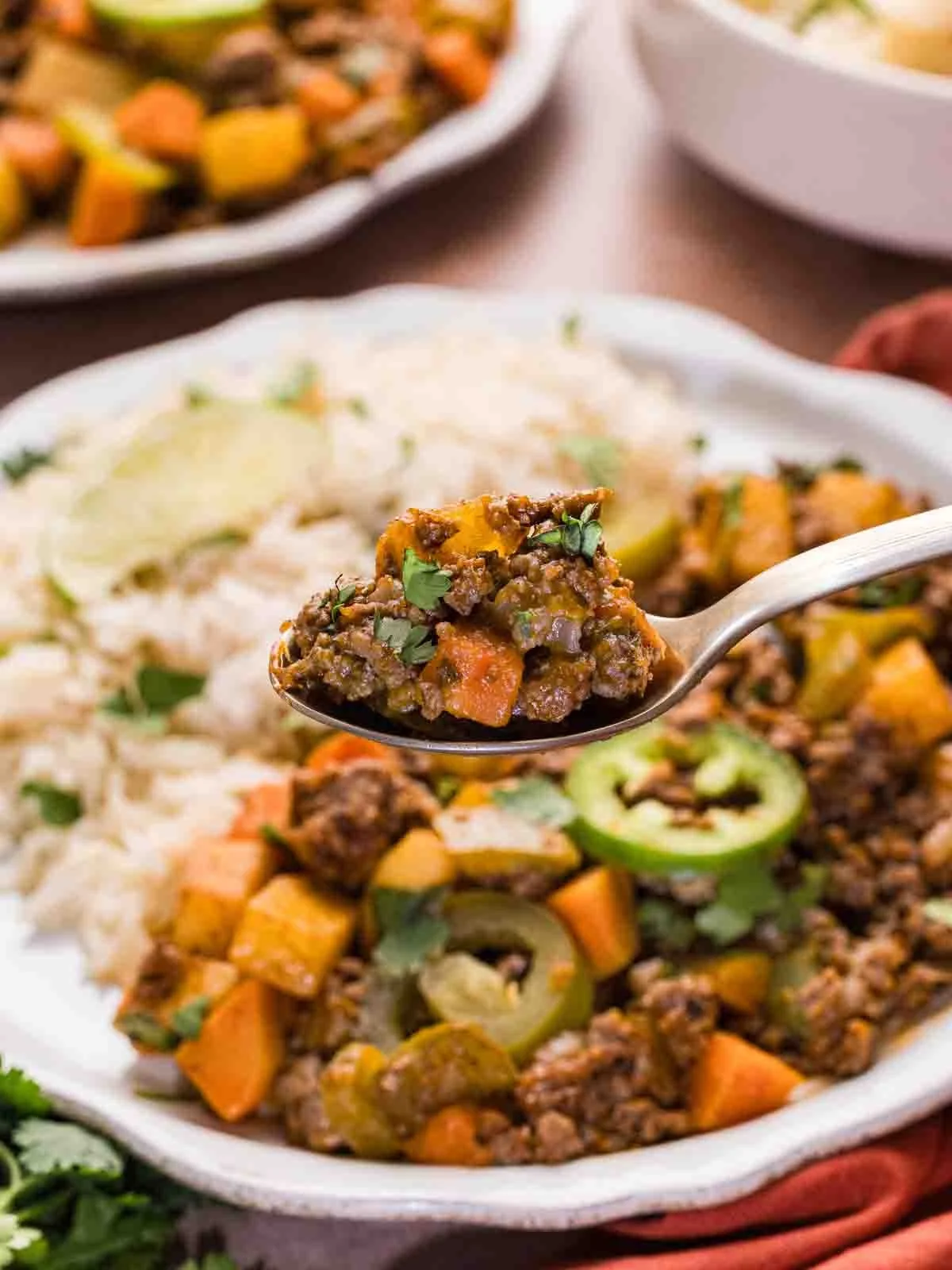
What you’re getting, and how long it really takes
Real time: about 65 minutes. Hands-on: about 15 minutes. The rest is the pot doing its job while you do dishes, fold laundry, or just stand there staring at the stove like a normal human being.
It’s a complete skillet meal. Beef, potatoes, and vegetables all cook together into something that’s equally good over rice or tucked into a warm tortilla. The ingredients are all pantry staples, nothing needs a specialty run, and it stretches a pound of beef further than you’d think. And here’s the part I love most: it reheats beautifully. Leftover picadillo the next day is honestly the best day of its life.
Picadillo isn’t one single standardized recipe. It shows up all over Latin America, the Caribbean, Spain, and the Philippines, and the list of ingredients changes from one region to the next, and from one kitchen to the next. Grandmas rarely write their versions down, so every family has its own. This one leans toward the Mexican/Tex-Mex side, with tomatoes, cumin, chili powder, and a whisper of cinnamon.
Ingredients
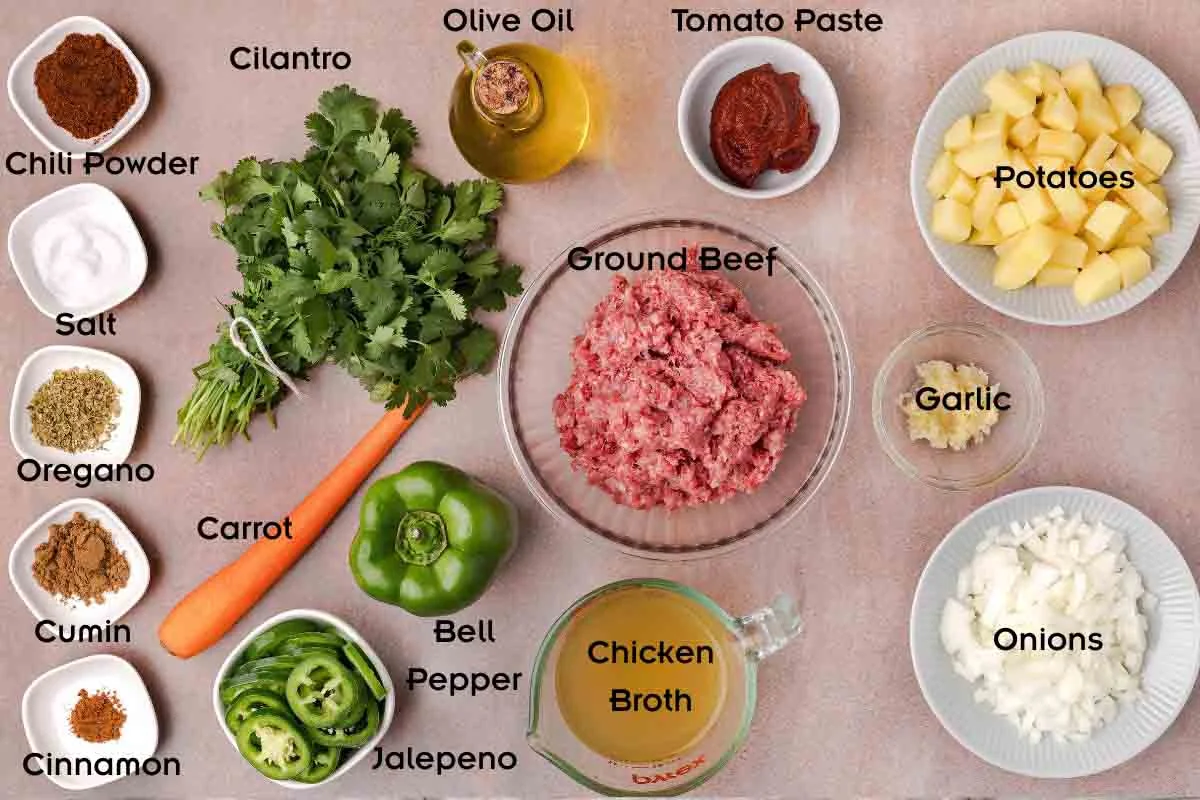
Lay it all out before you start. The restaurant word for this is mise en place, which just means everything in its place. It’s the difference between a calm cook and a panicked one, and it takes five minutes.
- 1 tablespoon olive oil
- 1 cup potato, peeled and diced
- 1 cup sweet onion, diced
- 1 large green bell pepper, diced
- 1 large carrot, diced
- 1 tablespoon fresh garlic, minced
- 1 pound ground beef (80/20)
- 2 teaspoons chili powder
- 1 teaspoon sea salt
- 1 teaspoon dried oregano
- 1 teaspoon cumin
- ¼ teaspoon cinnamon
- 2 tablespoons tomato paste
- 1 cup chicken broth (add more if needed)
- Chopped fresh cilantro, for garnish
- Sliced pickled jalapeños, for garnish
Yields 4 servings. About 400 kcal per serving.
Honest substitutions
- Ground turkey or chicken works in place of the beef. Add a little extra olive oil, because lean poultry doesn’t carry the same fat.
- Red or yellow bell pepper for a sweeter note instead of green.
- Beef broth instead of chicken, for a beefier finish.
- Yukon Gold potatoes are my pick. They hold their shape while going creamy inside. Red potatoes work too.
- Poblano in place of some or all of the bell pepper, for a mild, earthy chile flavor.
How to make it
The whole thing lives in one skillet. Here’s the order of operations, and why it matters.
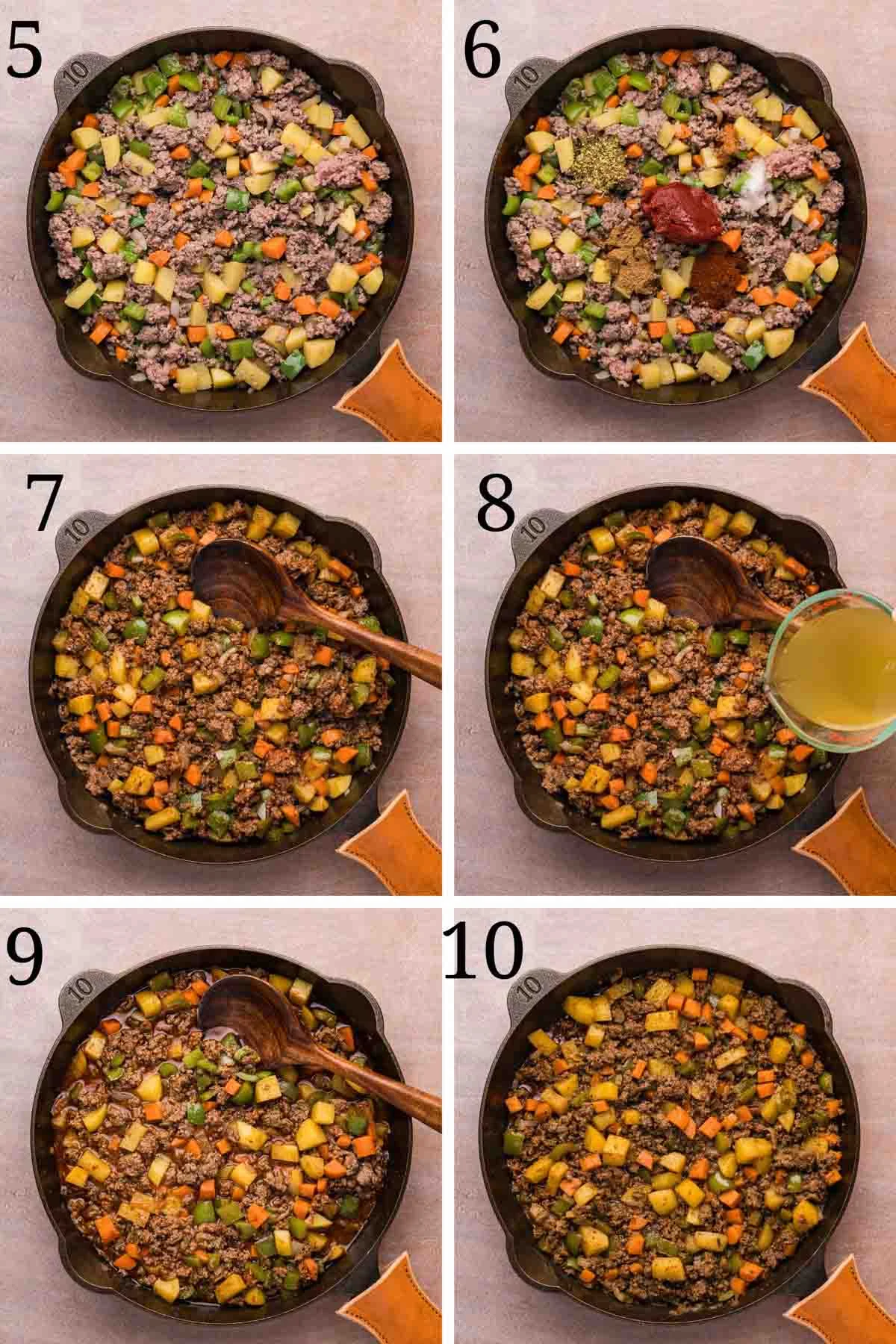
- Vegetables first. Heat the olive oil in a large skillet over medium heat. Add the potatoes, onion, bell pepper, and carrots, and cook for 4-5 minutes. They need a head start on the beef, or nothing finishes at the same time.
- Garlic, briefly. Add the garlic and cook for 30-60 seconds, just until it smells like garlic, not like burnt garlic. There’s no trick that fixes burned garlic.
- Brown the beef. Add the ground beef and stir to break it up. Brown for about 5 minutes. It doesn’t need to be cooked all the way through, just properly browned. A crowded pan traps steam, and steamed beef never gets that savory flavor.
- Build the sauce. Add the salt, chili powder, oregano, cumin, and tomato paste, and stir to combine. Let the tomato paste hit the hot pan for a minute before any liquid goes in. That takes away its raw taste.
- Simmer it down. Pour in the chicken broth and stir. Bring it to a simmer over high heat, then drop to medium-low. Cook, stirring occasionally, for about 20 minutes, until the potatoes are fork-tender and the sauce has thickened to coat everything. Add more broth if it starts to look dry.
How to know it’s done
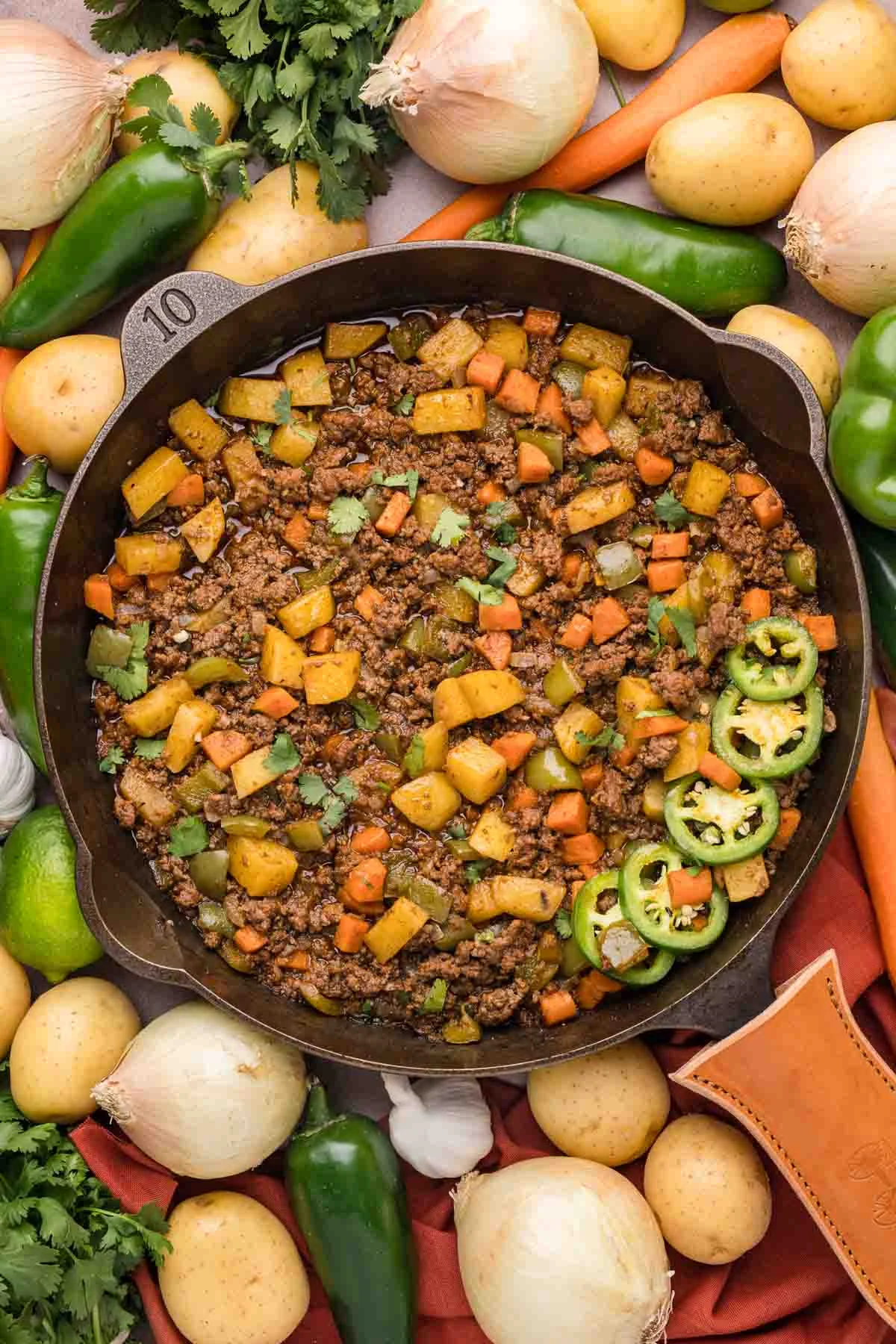
Don’t trust the clock. Trust your fork. Picadillo is finished when the potatoes are tender but still hold their shape, and the liquid has reduced into a sauce that coats the beef and vegetables, with little or no watery broth pooling at the bottom of the pan. If it still looks watery after the 20 minutes, turn the heat up slightly and simmer uncovered for a few more minutes.
Why it gets better as it simmers
A few things are happening in that skillet at once. Browning the beef builds savory, deeper flavors. The heat softens the vegetables, and the starch in the potatoes turns tender as it absorbs the liquid. And as the sauce reduces, everything concentrates, which is why the flavor is noticeably better after an hour of sitting in the fridge. That’s also why the leftovers win.
Serving
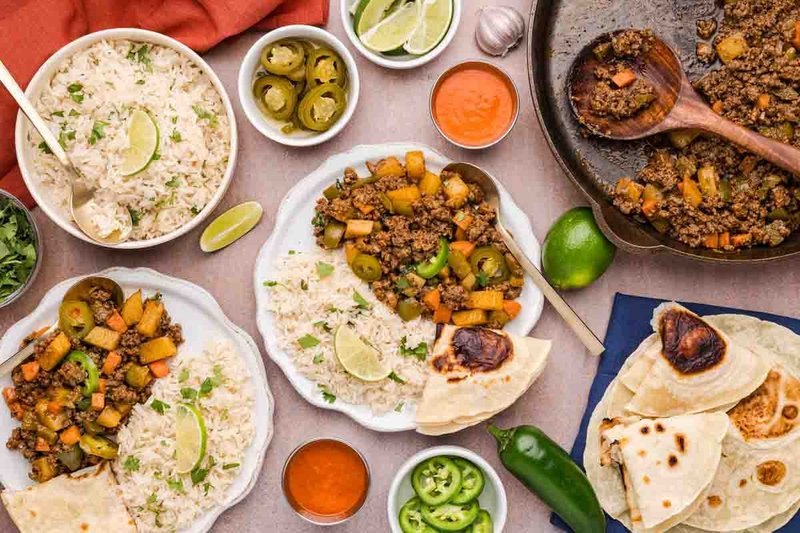
It’s hearty enough to be the whole dinner. Serve it with Mexican rice, pinto beans, warm flour or corn tortillas, and a pile of fresh toppings. It also plays well with refried beans, black beans, grilled corn, guacamole, pico de gallo, salsa verde, pickled onions, and queso fresco. If you’re pairing it with something to drink, a crisp Mexican lager keeps things light, a fruit-forward red like a Malbec handles the beef and the warm spices, and a non-alcoholic lime agua fresca is a perfect match if you’re skipping the alcohol.
Make it ahead and store it
Make a full batch on a weekend and you’ve got four dinners covered. Cook it completely, let it cool, and refrigerate it in a covered container for 3-4 days. Reheat it gently on the stovetop, adding a splash of broth if the sauce has tightened up. You can also freeze it in meal-size portions, though the potatoes soften a little after thawing. If you’re prepping the day before, dice the vegetables ahead of time and keep the potatoes submerged in cold water in the fridge so they don’t discolor. Add the fresh cilantro, lime, and jalapeños right before serving, so they still taste like fresh things.
Make it yours
- Spicy: Sauté a diced jalapeño or serrano with the onion and pepper. A little chipotle in adobo adds smoke without turning the whole thing into a fire alarm.
- Cuban-style: Stir in sliced green olives, capers, and a handful of raisins for that salty-sweet contrast.
- With corn: Fold in corn during the final 5-10 minutes. Its sweetness works surprisingly well against the cumin and chile.
- Taco night: Simmer the finished picadillo a few minutes longer until it’s a bit drier, then pile it into tortillas. You want it moist and flavorful, but not so loose that it runs out the bottom.
- Low-carb: Swap the potatoes for zucchini, cauliflower, or extra peppers, and cut back on the broth.
- Empanada filling: Cook it down until most of the moisture is gone. A wet filling and pastry dough are not friends.
Quick FAQ
Can I leave out the potatoes? Yes. Swap in extra peppers, zucchini, or cauliflower. The texture will change, but it still works.
How do I know when it’s done? The potatoes are tender and the liquid has reduced into a sauce that coats everything.
Why is mine dry? Too much liquid evaporated. Add broth a few tablespoons at a time until it loosens up.
Happy cooking,
Maya