
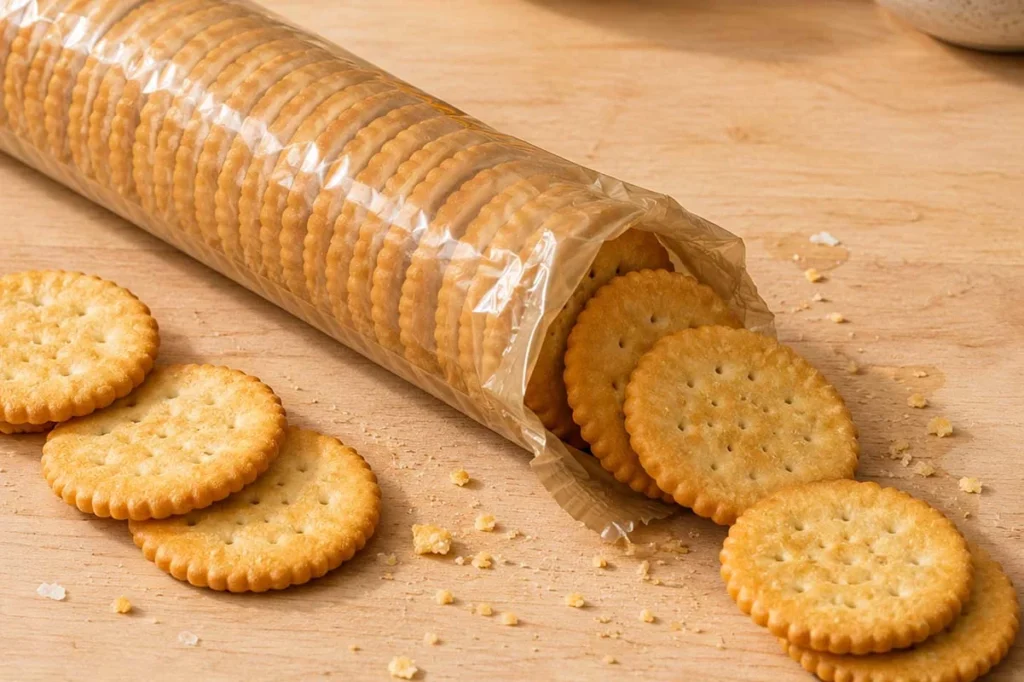
I found the box last week, in the very back of the pantry shelf, behind the flour. Opened sleeve, a few weeks old, the kind of thing you grab a handful from at a dinner party and never put back properly. The question I always ask myself: serve it, or toss it?
Here’s the short version. Crackers go bad, but slowly. They mostly lose their crunch first — that’s moisture, and it’s fixable. What’s not fixable is rancid oil, mold, or a bug in the box. Below is the whole check, written so you can run it in about a minute the next time the question comes up. I’d keep a printed copy on the pantry door.
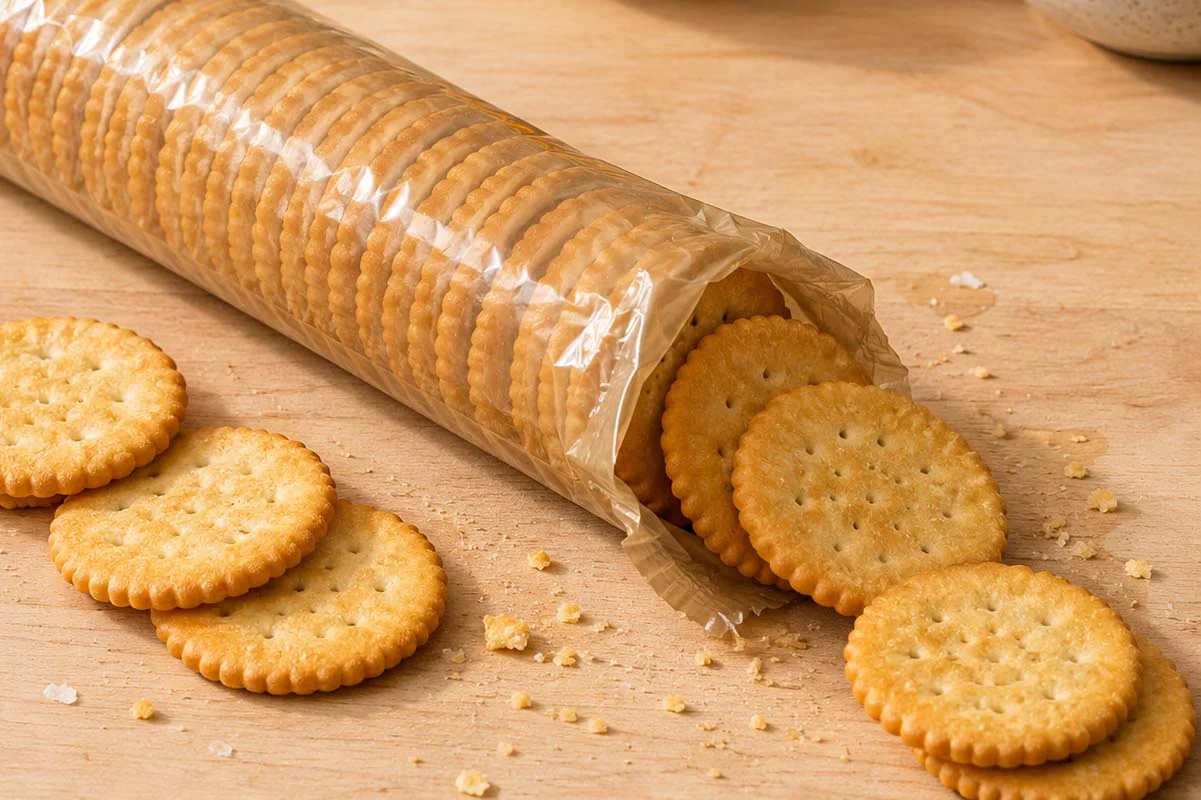
Promised in this post: one shelf-life list you can run in a minute — what the dates mean, how long crackers keep unopened and opened, the discard signs, and the exact re-crisp method from Missouri Extension (200 to 225°F, 5-minute rounds).
How this list works
- It’s a checklist for one shelf-stable staple: crackers in boxes and sleeves. The numbers come from extension and public health guides that cover crackers in general, not Ritz by name — I couldn’t find a Ritz-specific shelf life from Ritz or any agency, and I’d rather say that than give you a fake-precise number.
- Grouped into what the sources say, the discard check, storage, and the stale-cracker recovery.
- Assumes a home kitchen with a pantry, a freezer, and an oven.
What the dates and sources actually say
- Best-by dates are a quality note, not a safety stamp. USDA says product dates are not an indicator of safety, and the FDA backs “Best If Used By” wording as the point of best flavor and quality — so a passed date on a sealed box doesn’t automatically mean toss.
- Unopened: 8 months at 70°F per K-State. Their guide lists crackers at 8 months and says to keep them tightly closed. NDSU Extension and Virginia Cooperative Extension give the same 8 months unopened.
- Unopened: 6 months per the Windsor-Essex health unit. Their storage times apply to unopened packages and are general guidelines, not Ritz guarantees.
- Opened: 1 month per NDSU and Virginia Cooperative Extension. I’d read that as a quality window, not a cliff edge — the real question is whether moisture got in.
- Fridge: 3 to 4 months for opened crackers per Virginia Cooperative Extension — the only guide that lists a fridge time. Most of the rest say pantry.
- Freezer: 3 to 4 months per Virginia Cooperative Extension. NDSU says crackers stay crisp when packaged tightly and frozen, with no time limit. Freezing is an option, not a requirement.
- Where’s the date on the box? The FDA’s July 2025 recall notice for RITZ sandwich cartons puts “Best When Used By” dates like 1 NOV 25 and the plant code on top of the package. I found no official statement for Original boxes, so check the box and the sleeves.
The discard check (run this first)
- Visible mold — discard. The health unit’s rule is to discard food with evidence of spoilage, and on a cracker, mold is the clearest evidence there is.
- Insects, webbing, or tiny holes in the package — discard. UC IPM lists webbing in tight spots and tiny container holes as pantry-pest signs, and says to throw away infested food. Their pests page dates from 2013, which I’d note rather than ignore.
- A rancid or otherwise off smell — discard. Crackers contain added oil, so rancidity is a real concern as they age. Ohio State Extension treats smell as the practical test for rancid fats — don’t taste to find out.
- Wet, clumped, or moisture-damaged crackers — discard if anything else is wrong. If the package is dry and nothing smells off, plain softness is just texture — see the recovery section.
- A peanut-allergy household with a sandwich carton matching the 2025 recall — discard. The FDA’s July 2025 notice covered specific RITZ Peanut Butter Cracker Sandwich cartons where some individually wrapped peanut butter packs could be mislabeled as cheese. Anyone with a peanut allergy should discard affected product.
Two things that do not mean spoilage: a loss of crunch (that’s moisture, it’s recoverable), and a passed best-by date on a sealed, undamaged box stored cool. Crushed bits at the bottom of a sleeve are just normal handling. None of that overrides the discard check above.
Where to store them
- Cool, dry, dark shelf. K-State says to keep foods away from heat sources like appliances and sun. My suggestion: a pantry shelf away from the stove and dishwasher, with the oldest box in front.
- Airtight container once opened — not a folded sleeve. The Windsor-Essex health unit says opened packages go in airtight containers out of light and heat, and an open sleeve is exactly how moisture gets in.
- Tight-lid containers beat plastic bags for pests. UC IPM recommends tight-fitting lids on pantry containers; pantry pests can live many weeks without food, and by the time you spot one it has usually spread.
- Fridge only if you want to. Most guides say pantry. If you do refrigerate, seal them well or they’ll pick up moisture.
- Freezer for boxes you won’t finish soon. Sealed freezer bag or airtight container, and judge crispness after thawing. Not needed for a box you’ll finish in a few weeks.
- Check packages for damage before restocking. K-State says to inspect packages and use the oldest first — a torn box is an invitation.
Stale cracker recovery
- Re-crisp soft crackers in the oven. Missouri Extension says to spread them in a single layer on a baking sheet and heat at 200 to 225°F for 5 minutes, then stir and repeat in 5-minute intervals until crisp. One round may not be enough.
- Only if they’re otherwise normal. Re-crisping fixes moisture, not rancidity, mold, or pests — run the discard check first.
- Crush the rest into crumbs. A crumb topping for a baked dish, or the base for a crust. Crumbled crackers keep their flavor even when the snap is gone.
- Whole crackers go with dips and cheese. Stale-but-safe crackers with a cheese dip or a little fondue is a perfectly good evening snack.
- Flavored varieties, Ritz Bits, and filled sandwiches may differ. I found no official shelf life for those, so follow the storage directions on the package — the filling is the variable.
How to use it this week
- Do the pantry sweep on your next clean-up: pull every cracker and crumb container, run the discard check on each.
- Move anything opened into an airtight container with a tight lid before you put the box back on the shelf.
- Put the oldest boxes in front of the newest ones so the next box to be questioned is the one that’s actually the oldest.
- If you’ve got a box you won’t touch for a while, freeze it in a sealed bag and label it — 3 to 4 months is the listed window.
Make it yours
This is built for crackers, but the same check works for chips, tortilla chips, and most shelf-stable crackers in your pantry — the sources I used all cover the category. If you don’t have an oven handy, a dry skillet over low heat gets you partway there, though the oven method is the one I can point to a source for. Scale the discard check to whatever you store: mold, pests, rancid smell, wet package — same four, every pantry.
This article is general pantry information, not medical advice. If you get sick after eating something you suspect, that’s a doctor conversation.
Happy cooking, Maya.