
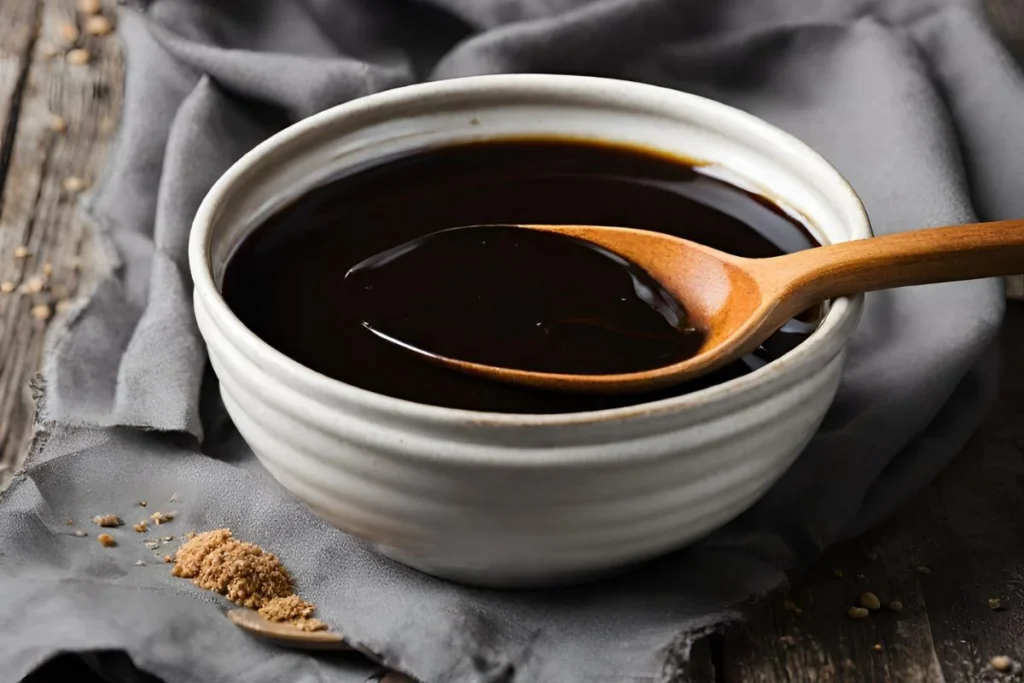
That bottle of molasses in the back of the pantry is one of the more durable sweeteners I keep. I pull it out for gingerbread and the occasional BBQ glaze, and it seems to survive on its own. But it isn’t the indestructible, decade-proof syrup some corners of the internet make it out to be.
Here’s what you get from this guide: a short, printable checklist for your molasses — what it actually lasts, the signs that mean it’s done, and the two storage habits that do most of the protective work. It takes about two minutes to read and you can print it and stick it inside a pantry door.
How this list works
Four sections, in the order you’d actually use them: the numbers, the spoilage signs, the storage habits, and the edge cases (freezing, bulk buys, second lives). Every item is one line — what to check and why. The numbers below come from Kansas State University Extension data, adapted from the USDA’s FoodKeeper guidance, and Grandma’s Molasses, one of the largest US producers.
Shelf life: the numbers that actually matter
Unopened, pantry — about 12 months for best quality. A sealed bottle has no path for contamination, so many unopened bottles stay usable well past that. The changes over a longer stretch are cosmetic: darker color, thicker consistency.
Opened, pantry — about 6 months for best quality. Shorter mainly because every opening exposes the syrup to air and whatever utensil you use. This is a quality window, not a safety deadline — the date marks peak flavor, not the moment it becomes unsafe.
Past the date — usually fine. Grandma’s Molasses has said there’s no single answer for how long it lasts past its best-by date, only that it may not be at peak quality. Judge the bottle by its condition, not just the printed date.
Why it’s so durable — 70 to 80 percent sugar. Molasses is what’s left after most of the sucrose is extracted from sugarcane or sugar beets. That sugar load dehydrates most bacteria and mold before they can multiply — the same basic principle that preserves honey.
Why it isn’t honey — the moisture gap. Honey holds very little water, generally under 20 percent. Molasses runs a bit higher, so it’s a durable product, not an invincible one. Moisture, not time alone, is what actually causes it to spoil.
Spoilage signs: what to check before you pour
Visible mold on the surface — toss the bottle. Uncommon, but when it shows up it’s almost always because moisture got in. Don’t skim the mold off and use the rest.
Sour, vinegary, or alcohol-like smell — toss it. Fresh molasses smells rich and bittersweet. A fermented or sour note means something is happening in there.
Bubbling — fermentation has started. Small bubbles mean live microbes. Even in a recipe where the flavor might get masked, discard it.
Darkening — normal aging, keep it. Older molasses gets darker. By itself that’s not a safety problem.
Thickening — normal, keep it. The syrup thickens with age and cool temperatures. That’s the expected behavior, not a red flag.
Mild crystallization — normal, keep it. A short warm water bath, bottle still sealed, usually loosens it back to a pourable consistency.
No mold, no off smell, no bubbles — use it. That’s the whole test. If none of the real signs are present, the bottle is fine, even well past the printed date.
One honest note before you rely on this: these are general pantry guidance from the USDA FoodKeeper and the Kansas State Extension, not professional food-safety advice. When in doubt, your nose and eyes are the final judge — and when they say toss, toss.
Storage habits that actually protect it
Keep the cap tightly sealed. An incompletely sealed cap lets humid air in. It’s the cheapest protection you’ll ever buy, and it does most of the work.
Use a clean, dry spoon every single time. A wet utensil is the most common way moisture sneaks into the bottle. This matters more for molasses than for most pantry staples.
Store it in a cool, dark pantry. Away from the stove, sink, or any source of steam, and out of direct sunlight. Condensation from sitting near a stove or sink is a real culprit.
Prefer a glass jar with a tight-sealing lid. Glass holds up better over time than plastic, which can degrade or stain and doesn’t seal as reliably on the long run.
Refrigeration — optional, not required. It’s not needed for safety, though some people refrigerate anyway in hot climates or if the bottle barely gets used. The tradeoff is a thicker, harder-to-pour syrup.
Edge cases: freezing, bulk buys, and second lives
Freezing — possible, rarely necessary. Because of its sugar content, molasses won’t freeze completely solid; it turns into a thick, grainy, pourable slush, the way frozen honey behaves. If you do freeze it, portion it into an ice cube tray for smaller, convenient amounts.
Bulk feed-grade — check the label before you drink it. Molasses is sold in two distinct grades: food grade, handled to human-consumption standards, and feed grade, intended for livestock, which isn’t always pasteurized or filtered the same way and is sometimes labeled “not for human consumption.” Feed-grade is often much cheaper and sold in large jugs marketed toward gardening or animal feed. A bargain bulk jug is not automatically a kitchen jug.
Sulfured vs. unsulfured — a small difference. Sulfured molasses, made from immature sugarcane treated with sulfur dioxide during processing, has traditionally been considered somewhat more shelf-stable. Most molasses sold in the US today, including major brands, is unsulfured. Blackstrap, dark, and light all follow roughly the same storage timeline regardless.
Aged past baking — the gardening second life. Molasses that’s aged past the point you’d want in a delicate baked recipe can be diluted with water and used as a soil additive to feed beneficial microbes in organic gardening. It doesn’t need to meet the same freshness standard as food you’re eating directly.
How to use it this week
- Walk to the back of the pantry, pull the bottle out, and do the three-point check: mold, smell, bubbles. Two seconds, and you know where you stand.
- If it’s thick or crystallized, set the sealed bottle in a bowl of warm water for a few minutes until it pours.
- Switch to a dedicated dry molasses spoon and keep it clipped to the cap so no one reaches for a wet one.
- Print this list and stick it inside the pantry door where the bottle lives.
- If the bottle is well past six months opened and you’re not sure, taste a small amount. Rich and bittersweet means go; anything sour means it’s compost day.
Make it yours
Work molasses into a bourbon baked ham glaze, Cajun-style BBQ ribs, a classic meatloaf sauce, or gluten-free bread pudding instead of letting it sit for a year. If your climate is hot and humid, lean on the fridge option — you’ll lose pourability but gain a longer quality window. And if you’re the type who only uses a teaspoon at a time, a small ice-cube-tray portion is a fine way to keep it without committing to a full bottle.
Quick FAQ
How long does opened molasses last? About 6 months at room temperature for peak quality. It’s typically safe longer as long as there’s no mold, off smell, or fermentation.
Can you freeze molasses? Yes, and it stays safe indefinitely, though it’s rarely necessary. It won’t freeze fully solid — expect a thick, grainy texture rather than a hard block.
Is bulk molasses always safe to eat? Not necessarily. Check for food grade. Feed grade is for livestock, often not pasteurized or filtered the same way, and sometimes labeled “not for human consumption.”
Does it need to be refrigerated? No, not for safety. It’s shelf-stable at room temperature, and refrigeration only extends quality at the cost of a thicker texture.
Happy cooking, Maya.