
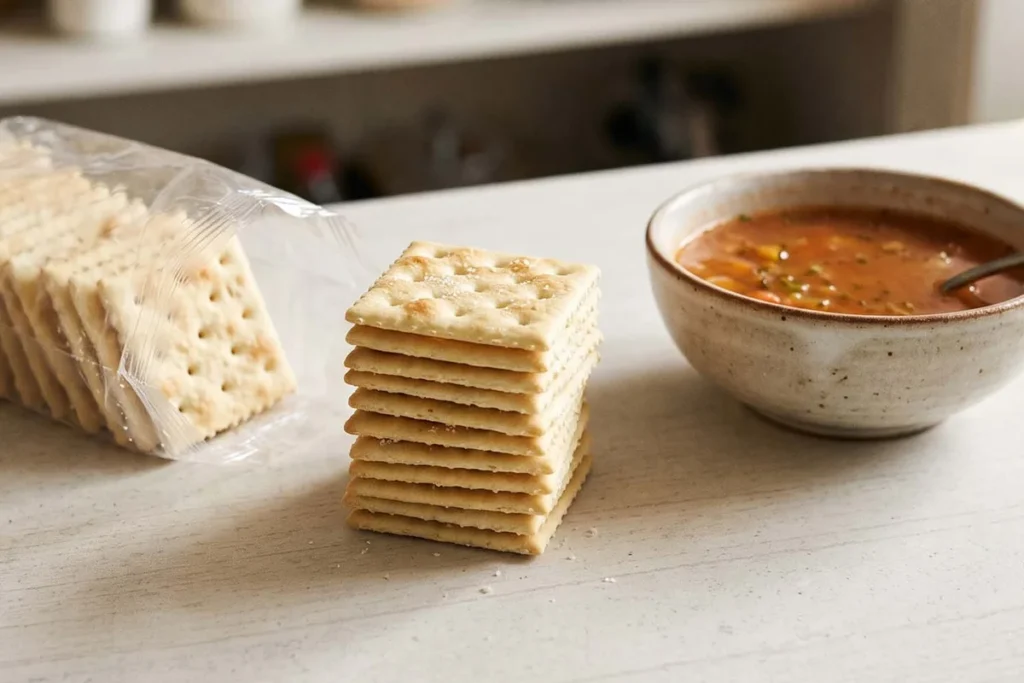
The saltine box at the back of my pantry outlived three meal plans. It’s the one I buy for a sick day, hand it off to my husband, and never think about again until someone actually gets sick. When I finally opened it, a few crackers had gone soft, and I wasn’t sure if that was a texture problem or a toss-it problem.
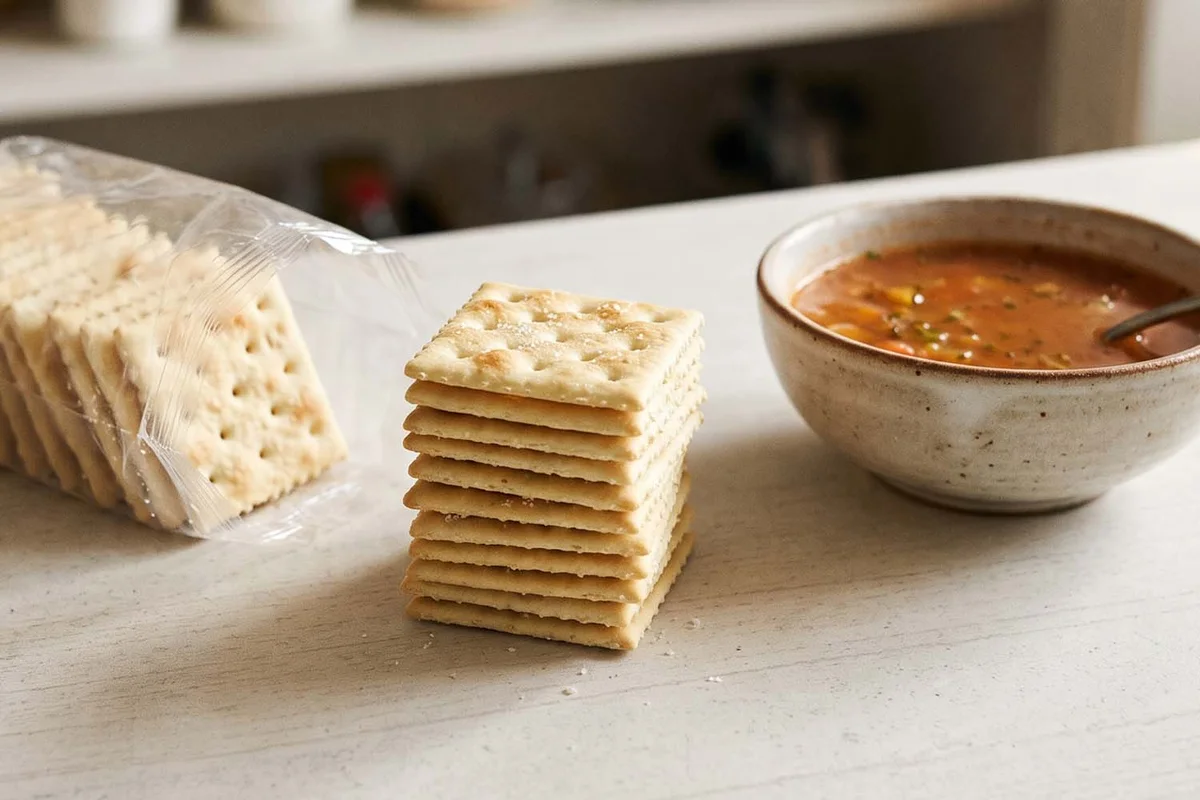
So I dug through what the extension guides and government pages actually say, and turned it into the list below: what to keep, what to toss, and what to bring back. You can work through it in about five minutes, box in hand.
How this list works
Four sections: shelf-life numbers, storage setup, the four toss signs, and revival moves. Every number comes from published extension or government guidance on crackers in general — none of the guides names saltines specifically, so treat them as best-quality windows, not guarantees.
The shelf-life numbers
Unopened box, cool and dry — NDSU Extension and Virginia Cooperative Extension list crackers at 8 months unopened; K-State lists 8 months at 70°F; the Windsor-Essex health unit lists 6 months for unopened packages.
Opened box — NDSU and Virginia Cooperative Extension both list 1 month once opened, and NDSU says to keep the box tightly closed. I read that as a crispness window, not a safety cutoff.
Freezer — NDSU says crackers stay crisp when packaged tightly and frozen, with no time limit; Virginia Cooperative Extension lists 3 to 4 months.
Fridge — Virginia Cooperative Extension lists opened crackers at 3 to 4 months in the refrigerator. Most of the guides I read say the pantry is the standard spot, so the fridge is a fallback, not a home.
Best-by date — USDA says dates are not an indicator of safety; a product should still be safe and wholesome if handled properly until spoilage is evident. The FDA backs up the “Best If Used By” wording: it marks the date a product is at its best flavor and quality, applied at the manufacturer’s discretion.
Emergency pantry — Head Start lists crackers among foods to eat within 6 months in an emergency supply, wrapped in plastic bags and kept in sealed containers. For a different kind of number, USDA’s commercial item description requires crackers purchased under it to have a shelf life of at least 9 months from the date of manufacture — a government purchasing rule, not a pantry rule.
Other varieties — I found no official shelf life for unsalted tops, whole wheat or flavored crackers. Different ingredients keep differently, so follow whatever the package says.
Storing saltines right
Pantry shelf, away from the stove — K-State says to store foods in a cool, dry, dark location away from heat sources like appliances and the sun. I keep mine on a shelf that the oven’s heat never reaches.
Air-tight once opened — NDSU says keep the box tightly closed, and the Windsor-Essex health unit says to move opened crackers into airtight containers, out of light and heat. A folded-over sleeve is the easy way for moisture in, so I tip them into a sealed container.
Tight lids beat plastic bags — UC IPM recommends containers with tight-fitting lids for pantry pest-proofing, rather than bags.
Oldest box in front — K-State says to check packages for damage and use the oldest products first; Head Start’s rotation rule is the same: new food at the back, older food at the front.
Write the date on the sleeves — if you pull the inner sleeves out of the box, mark the date on each sleeve with a marker. That’s what Head Start suggests for dating replacement food, and it saves the “when did I open this” guessing game.
Sealed well if you refrigerate — if you do move opened crackers into the fridge, seal them well so they don’t pick up moisture.
Freeze in a sealed bag or container — if you want to hold a box longer, NDSU says tightly packaged crackers stay crisp when frozen, so a sealed freezer bag is the move. Judge the crispness after thawing.
The four signs to toss
These are the checks I run before opening a second sleeve. Any one of them means the box goes in the trash.
Visible mold — the health unit’s rule is to discard food with evidence of spoilage, and I extend that to anything I can actually see.
Insects, webbing or tiny holes in the package — UC IPM says those are signs of a pantry pest infestation, and that pests can live for many weeks without food, so by the time you spot one it has usually spread to other packages. Wash the shelves with soap and water and vacuum the crevices before restocking.
A rancid or off smell — USDA’s specification for saltines sets a minimum fat content of 8 percent, so there is real fat in there to turn. Ohio State Extension treats smell as the practical test for rancid fats. I don’t suggest tasting to check.
A wet or damaged package, or clumped crackers — moisture damage that goes beyond softness means the box has been fighting a humid corner of the kitchen. If it’s only soft, that’s the next section’s problem; if it’s wet or clumped, toss it.
What does not automatically mean toss: a passed best-by date on a sealed, undamaged box stored cool, and a few crushed crackers or crumbs at the bottom of the sleeve. Those are normal.
Reviving what’s still good
Re-crisp soft crackers in a low oven — Missouri Extension says to spread crackers in a single layer on a baking sheet and heat them at 200 to 225°F for 5 minutes, then stir and repeat in 5-minute intervals until crisp. One round is often not enough. Only do this if the saltines are merely soft from absorbed moisture, the package is intact, and there’s no mold, pests or off odor — re-crisping fixes moisture, not rancidity.
Crumble them into soup — saltines that are a little stale but smell fine break down into a crumb topping that gives a bowl of soup texture.
Set whole ones beside a dip — a plate of crackers next to whatever dip is already in the fridge is a five-minute snack that uses the box before it goes fully soft.
How to use this week
- Pull every cracker box out of the pantry and check the date and the box for damage before you buy more.
- Move any opened boxes into airtight containers today — that’s the single change that matters most.
- Put the oldest box at the front of the shelf and the new ones behind it.
- If you have soft saltines and an open evening, run the 200 to 225°F oven trick while something else bakes.
Make it yours
If your kitchen is humid, skip the pantry shelf entirely and keep crackers in the sealed container on a higher shelf. If you buy saltines for a kid’s lunchbox or the car, the sleeve-on-the-go life is short — the re-crisp trick earns its keep there. And if you’re comparing boxes, the same list works for any plain cracker; the guides I read cover crackers in general, so nothing here changes when you swap brands.
FAQ
Do saltine crackers go bad? Yes, slowly — they lose crunch when they absorb moisture, and old ones can turn rancid. The extension guides I found list crackers at 8 months unopened and 1 month opened, but none names saltines, so check the signs, not just the date.
Can you eat saltines after the best-by date? Usually, yes. USDA says dates are not an indicator of safety and that a properly handled product stays safe until spoilage is evident. Check the box and the crackers for the four signs above before deciding.
Why are my saltines soft? They’ve absorbed moisture from the air — an opened sleeve left loose or a spot near the sink does it. If they’re only soft and otherwise normal, the low-oven re-crisp works.
Can bugs get into saltines? Yes. UC IPM says pantry pests can infest packaged dry foods and can live for many weeks without food, so inspect opened packages, use tight-lidded containers, and toss anything with signs of infestation.
Happy cooking, Maya.