
Here’s a side dish my family doesn’t even wait for dinner to start over. A few nights ago the whole pan got raided while I was still plating the main course — pieces snatched straight out, no napkin, no manners, no complaints. That’s the highest review a kid can give.
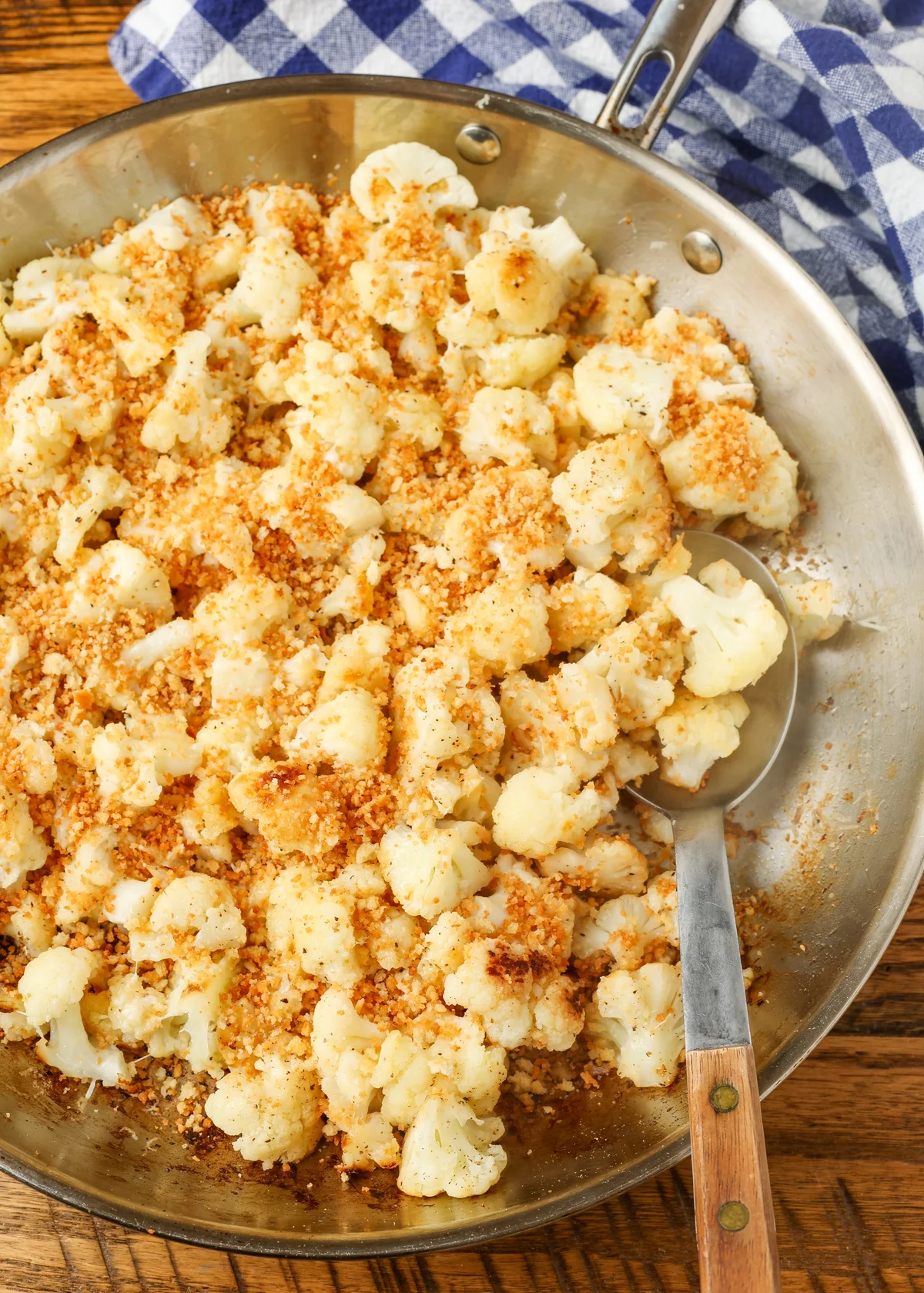
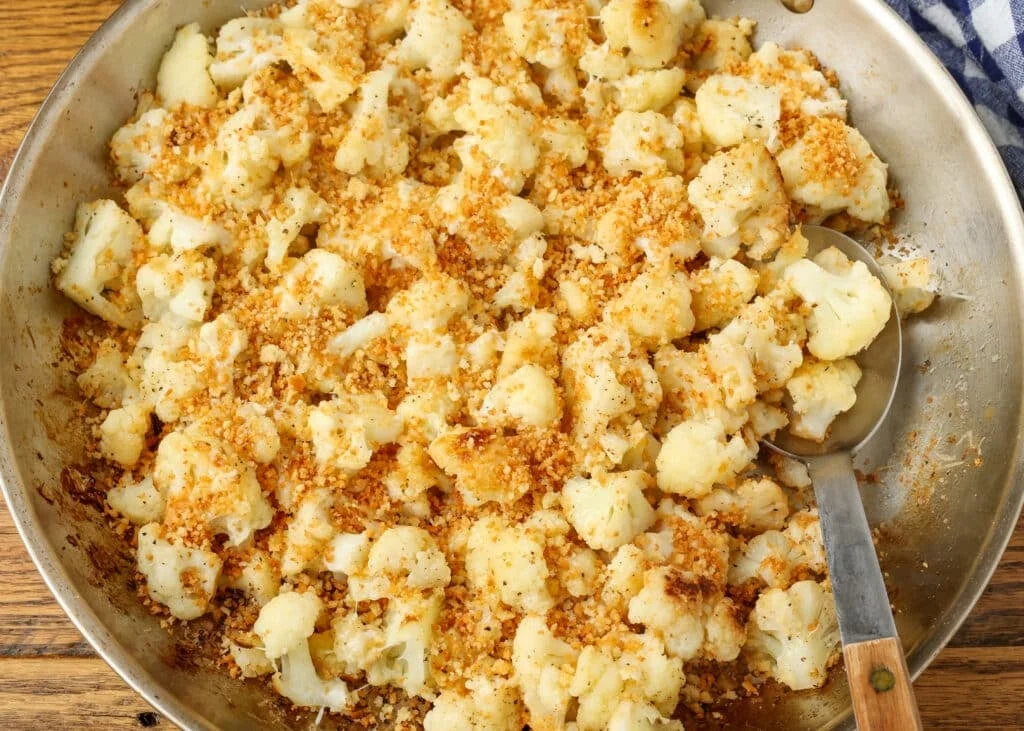
This sauteed cauliflower is the reason. It’s the kind of thing I keep on rotation all week: hearty, cheesy, and done in under 30 minutes with barely any fuss. I’ve spent eight years in restaurant kitchens, and I still can’t explain why a simple pan of browned cauliflower, a little butter, and toasted breadcrumbs lands so hard at the table. Maybe it’s the contrast — tender inside, crisp outside, that salty Parmesan melt. One of my boys is normally a fierce critic of anything with cauliflower in it. He came back for seconds.
Real time: 25 minutes. Hands-on: 10. One oven-safe skillet, one lid, that’s your whole toolkit.
Ingredients (and honest swaps)
- Cauliflower, 1 medium head, cut into 1-1½-inch pieces (about 6 cups). It soaks up flavor like nothing else in the produce aisle, and it keeps a satisfying crunch.
- 2 tablespoons salted butter, divided. I only cook with salted butter unless a recipe says otherwise.
- ⅓ cup panko breadcrumbs. Panko is my go-to for the crunch, but any good breadcrumb works — I’m not brand loyal here.
- ¼ cup freshly shredded Parmesan. That’s where the nutty, savory depth comes from. Shred it yourself; the pre-shredded stuff clumps.
- ½ tablespoon kosher salt and ¼ tablespoon freshly ground black pepper, adjusted to taste. Kosher salt, freshly cracked pepper, always.
You’ll also want a large oven-safe skillet (mine is a heavy 12-inch one, broiler-safe to 800°F, and it earns its keep), a sharp knife, a cutting board, and a microplane if you have one.
Method
Prep while the pan heats. Grate the Parmesan and set it in the fridge. Chop the cauliflower into uniform pieces — this part matters, because even pieces brown evenly, and you want every floret to come out the same shade of golden.
- Melt 1 tablespoon of butter in the skillet over medium-high heat.
- Add the panko and stir quickly to coat it in the butter.
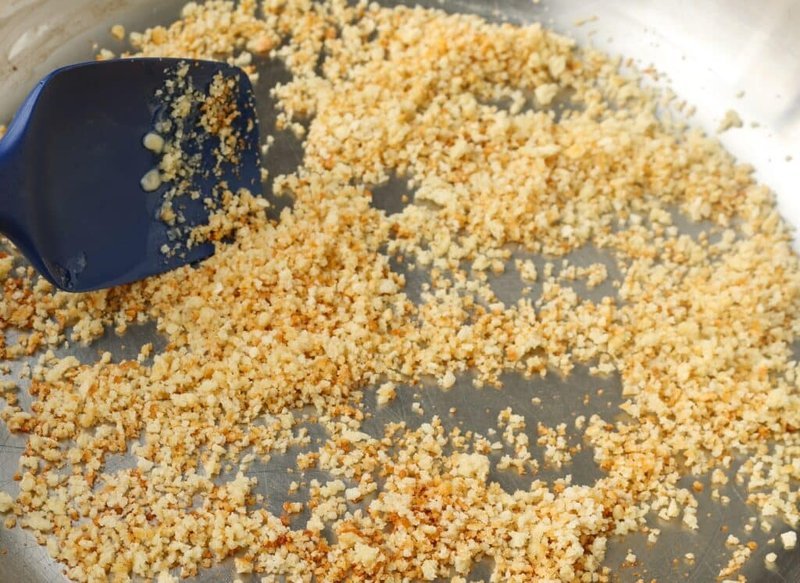
- Toast for about 2 minutes, until golden. Don’t rush this step, and don’t walk away — breadcrumbs can go from nutty to bitter-black in the space of a minute. If yours are browning fast, drop the heat and give them a little more time.
- Transfer the crumbs to a plate. They’ll keep browning for a moment or two after they come out of the pan, so let them cool before they get too dark.
- Return the pan to the stove over medium-low. Add the cauliflower and 2 tablespoons of water, cover, and let it steam for about 5 minutes.
- Uncover, raise the heat to medium, and cook until the water evaporates.
- Add the remaining tablespoon of butter and let it melt. Keep the cauliflower moving — stir frequently — for 8-10 minutes, until it’s browned all over, fork-tender, but still plenty crisp. That’s the texture I’m after: tender enough to slice, firm enough to bite into.
- Season generously with salt and pepper.
- Shower the Parmesan over the top, cover, and turn off the heat. Let it sit until the cheese melts and the pan gives off one last little puff of steam.
- Top with the toasted crumbs and serve straight from the pan. It’s best the moment it hits the table.
Make it yours
This is a blank canvas, honestly. A pinch of chili flakes before the cheese if the house likes some heat. Fresh parsley stirred in at the end for color. Or go all-in: this pairs great with anything that comes out of a skillet — pork chops, a baked chicken, a steak with rice on the side. It’s the kind of side that disappears first, which is how I know a weeknight went right.
Make ahead & storage
If I’m being honest, don’t. Reheating kills the crisp on both the crumbs and the florets, and this dish is all about that texture. If you do have leftovers, they’re fine in an airtight container in the fridge, and a quick reheat in the microwave gets the job done — just know you’re eating a good, warm version of this, not the first-serve version.
FAQ
How often should I stir? Every minute or two. Vegetables in a skillet want attention — flip and turn them as needed so every side gets a proper brown sear.
Why is my cauliflower sticking? Usually it means you need more butter, or the heat crept up while it was simmering. Drop the burner to medium-low and give it another knob of butter if things are grabbing on.
How do I know it’s done? The fork test. It should slide in with a little resistance — tender, but with a real crunch left in it.
Happy cooking,
Maya