
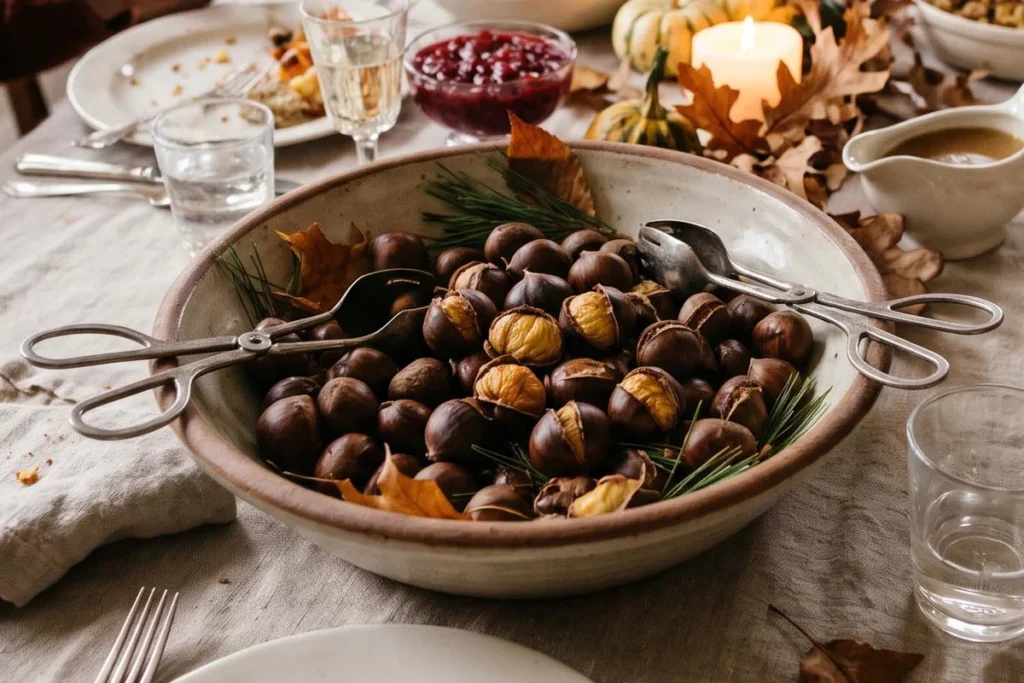
Every holiday season the market has a bin of fresh chestnuts, and I keep buying the same bag. Not because I’m sure what to do with them — because roasting them sounds like a good idea on the day I buy them. Last year a bag sat on the counter until it was too late, and the lesson cost me the whole bin.
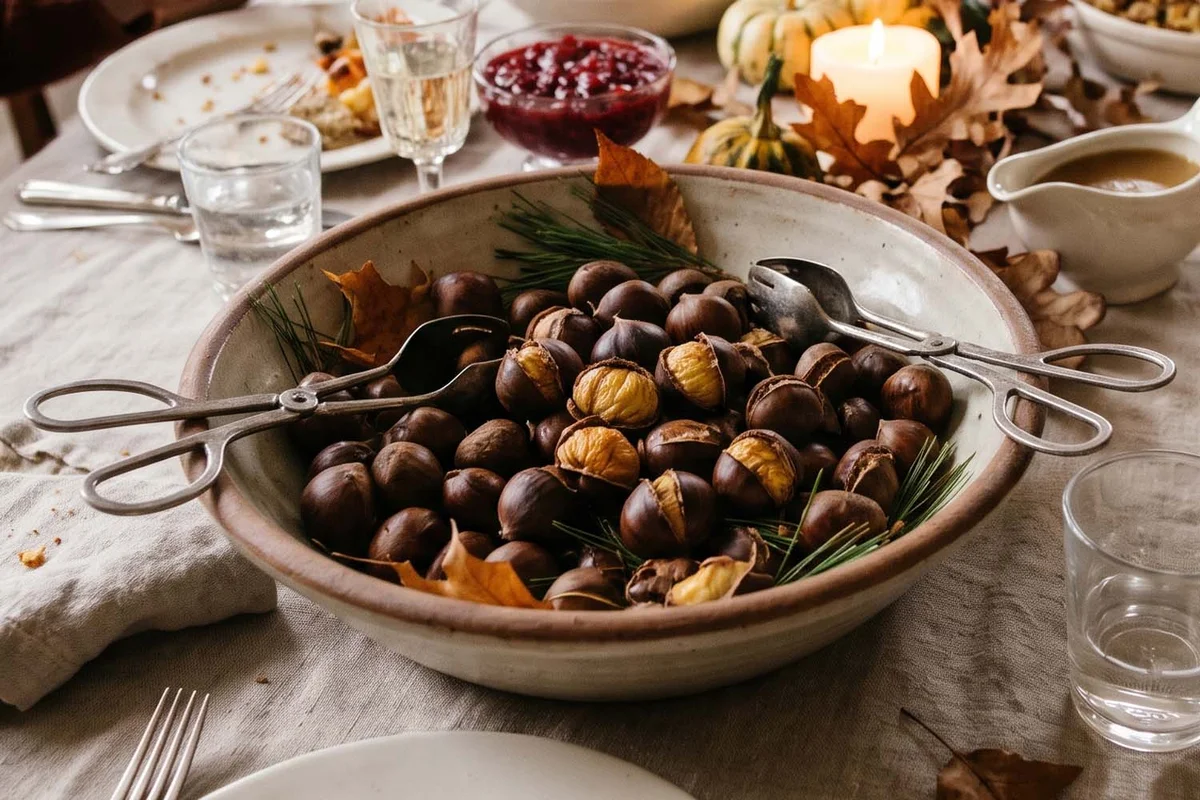
So this time I wrote it down. How long chestnuts last at each temperature, what “bad” looks like, and what the university guides say when they disagree. This is the result — a two-minute read covering fresh, cooked, frozen and dried chestnuts, plus the checks to run before you roast anything that’s been sitting around.
How this list works
Everything below comes from published extension guides (UC Agriculture and Natural Resources, Oregon State, University of Missouri, Michigan State, Illinois Extension) and USDA’s general food-safety pages. I’ve kept their numbers as printed, and where the sources genuinely disagree, I show both figures and say which one I’d plan around. None of it is a food-safety promise — these are quality estimates from public guides, not a lab result. If you’re cooking for someone with a food allergy or a medical diet, ask your doctor or a dietitian, not this page.
How long chestnuts last, by where they’re kept
- Room temperature — plan on a ceiling, not a target. UC and Oregon State both say fresh in-shell chestnuts stored above 50°F usually mold within 2 weeks, and the kernels dry out and harden as they sit out.
- Refrigerator, fresh in-shell — the sources range from a couple of weeks (Missouri) to 1 month (UC’s text) to 2 to 3 months (UC’s table, Oregon State’s 2013 revision). I plan on about 2 weeks for best quality and check the bag often.
- Refrigerator, scored and uncooked — about 1 week, per the University of Missouri Center for Agroforestry. Once you’ve cut the shell, the clock runs faster.
- Freezer, in-shell — UC lists a year or more at 0°F or colder, and Oregon State lists 1 year. Michigan State advises keeping fresh chestnuts cold without freezing them, so I’d treat the freezer as a rescue for chestnuts I won’t cook in time, not a place to hold peak quality. Use frozen chestnuts right after thawing.
- Cooked, peeled — about 4 days in the refrigerator (Missouri), which matches USDA’s 3 to 4 days for leftovers. Frozen cooked chestnuts keep 3 to 4 months, per USDA’s general leftovers rule.
- Dried — stores longer than fresh, at the cost of flavor and texture. UC says shelled, dried chestnuts keep a year or more refrigerated or frozen; Oregon State says up to a year refrigerated and up to 2 years at 0°F. They won’t roast properly after rehydrating.
- Canned, jarred, vacuum-packed — I found no university or agency source with chestnut-specific times, so the label is the rule. Discard heavily rusted or deeply dented cans, and skip anything leaking or bulging.
How to store the bag you just bought
- Refrigerate the day you buy them — the counter is only a waiting area, not a storage spot.
- Use a loosely closed or perforated bag — UC says a plastic bag or closed container to hold moisture; Illinois and Michigan State say a ventilated plastic bag with fork-poked holes; Missouri says perforated, mesh or paper. The sources differ, so I go with a bag that’s closed but not airtight.
- Check every few days — look for mold, sprouting and soft spots, and pull out any chestnut that fails before it takes the rest down with it.
- Score before cooking, every time — Illinois Extension says the outer shell and the inner skin must be pierced with a sharp serrated knife, one slit across the widest part, without cutting into the kernel. Roasting an unscored chestnut is how bags go wrong.
- Freeze what won’t get cooked within about 2 weeks — Missouri’s suggestion: score first, then freeze in the shell in a freezer-safe bag or container.
- Skip curing unless you want it sweeter — Oregon State says curing isn’t necessary for chestnuts that will be refrigerated; Michigan State describes curing as holding them at 32 to 40°F for at least two weeks, which makes them sweeter. That’s a flavor move, not a safety move.
Signs a chestnut is bad
- Mold, especially at the tan end — discard it without sniffing; USDA’s mold page says sniffing a moldy item can cause respiratory trouble, and it lists nuts in general under “Discard.” If more than one chestnut is moldy, or you can’t confirm the rest are clean, I’d discard the whole batch.
- Blue streaking through the kernel — Illinois Extension says avoid these, full stop.
- A vinegary, sour or musty smell — named by both Illinois Extension and Missouri.
- A slimy feel — another Illinois Extension red flag; fresh chestnuts should be very firm and not dent when pressed.
- Sprouting — Missouri says to remove sprouted nuts right away.
- Larvae, webbing or tiny round holes — the round holes are weevil exit holes, and the grubs attack the nut from within. I haven’t found a source that says an infested nut is safe, so any chestnut with a hole or larvae goes in the trash.
- Cooked chestnuts past 3 to 4 days in the fridge, or left out more than 2 hours — USDA’s leftovers rule. Roasted chestnuts that sat on the counter overnight get thrown out.
Things that don’t mean it’s bad
- A tan-colored end — Illinois Extension describes the tan end as normal; it just needs to be free of mold.
- Hard, dry kernels with no mold — a quality problem, not a safety one. Chestnuts lose moisture fast at room temperature and can dry and harden; they’ll just roast poorly. Check for mold and smell first.
- A “best by” date that’s passed — USDA says dates are about quality, not safety (the exception is infant formula). A bag of chestnuts that’s a little past its date is fine if it checks out on mold, smell and texture.
- Eating one raw — Illinois Extension says all true chestnuts are edible raw or roasted, though roasting is the preferred method. Just don’t confuse them with horse-chestnuts or buckeyes, which are unrelated and can be toxic.
When in doubt, here’s what I do
- A bag that’s been in the fridge 3 weeks — past Missouri’s couple of weeks, within UC’s 1-month figure. I check every chestnut for mold, blue streaks, sprouting and smell, and discard anything that fails.
- A bag in the fridge for 2 months — within the higher published figures, but I expect lower quality. If several are moldy, the whole bag goes.
- Chestnuts that sat on the counter for 2 weeks — right at the point where mold usually shows up. I’d refrigerate the survivors immediately and check each one.
- A chestnut with a small round hole — discard. I’d rather lose one to a weevil than eat one I’m not sure about.
- Reheating leftovers — USDA says to reheat cooked leftovers to 165°F with a food thermometer. I keep a cheap one in a drawer for exactly this.
How to use this list this week
- Buy chestnuts close to when you’ll cook them — Illinois Extension’s suggestion, and the cheapest insurance you’ll get.
- The day they arrive: check them over, move them straight to the fridge in a perforated or loosely closed bag.
- Roast the first batch within the week, score first, and freeze any whole chestnuts you won’t cook in about 2 weeks.
- Leftover roasted chestnuts: into a container in the fridge within 2 hours (1 hour if the room is above 90°F), gone in 3 to 4 days, or frozen for up to 3 to 4 months.
- Every few days, open the bag and look — mold is the one thing that spreads, and a 30-second check is the whole job.
Make it yours
If you’re roasting a big batch for a holiday table, double the “check every few days” habit — bigger bins spoil unevenly, and the bottom of the bag is where the problem starts. If you live somewhere warm, don’t trust the counter at all; the 2-week room-temperature figure assumes you’re above 50°F, which is most kitchens most of the time. And if you’ve got dried chestnuts in the pantry, they’re your backup: soak them in cold water for 3 or 4 hours before using them, and expect a different texture than fresh.
FAQ
Why do chestnuts mold so much faster than other nuts?
UC’s guide says chestnuts are perishable, high-starch, low-fat foods — more like potatoes or apples than tree nuts. They lose moisture quickly at room temperature, which dries the kernels and leaves them open to mold.
Why do the sources give different fridge times?
UC’s own guide disagrees with itself: the text says 1 month for in-shell chestnuts at 40°F or colder, while its table says 2 to 3 months. I show both and plan around the shorter figure, about 2 weeks, because quality drops before safety does.
Can I eat chestnuts with a small hole in them?
I wouldn’t. The hole is usually a weevil exit hole, and the grub has been eating the nut from inside. I haven’t found a source that says infested chestnuts are safe, so they get discarded.
Do I need to cure chestnuts before storing them?
Not for safety. Oregon State says curing isn’t necessary for chestnuts that will be refrigerated. Michigan State describes curing — 32 to 40°F for at least two weeks — as a way to make them sweeter, which is worth it only if you’re holding them longer.
Written down, it works.