
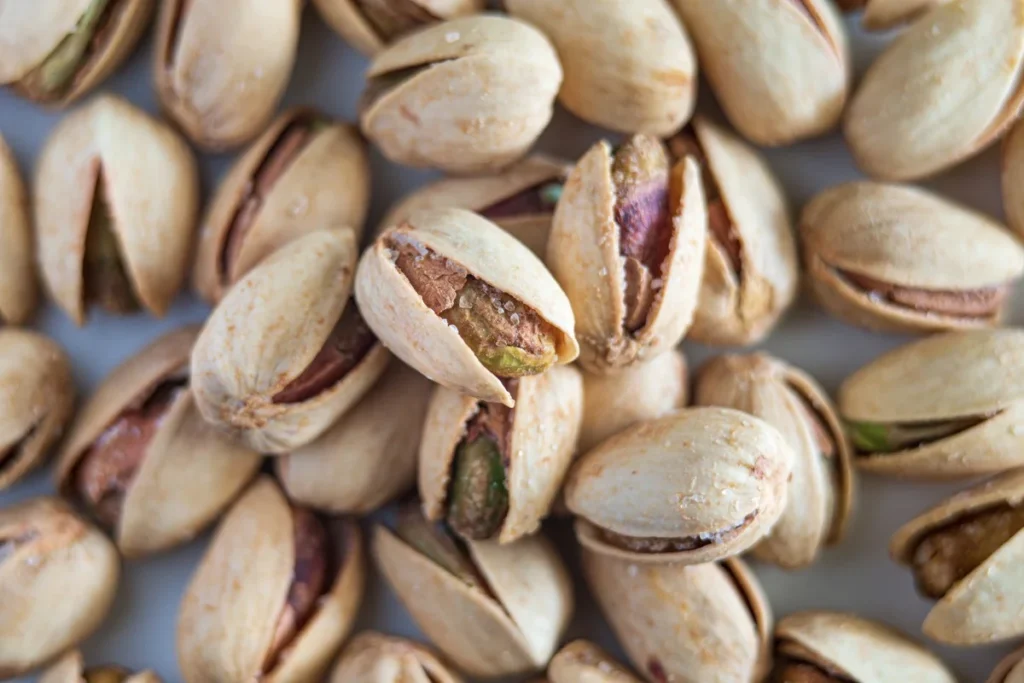
Every few months I do the pantry sweep, and there it always is: the bag of pistachios shoved behind the flour, label facing the shelf, purchased in a moment of snack-store enthusiasm I can’t quite place. They’re not the kind of thing that expires loudly. No smell, no squish, no drama. But they don’t last forever either — the oils in the nut break down, and that’s where the problem starts.
Here’s the promise: by the end of this list, you’ll know exactly where each bag of pistachios you own belongs, how long it’ll actually keep, and the five signs that mean it’s time to toss. It takes about five minutes to read and two minutes to put into practice next time you open the pantry.
How this list works
Everything below is organized into four sections: shelf-life numbers you can actually use, a storage plan for your pantry and fridge, a spoilage checklist you can run in under a minute, and a short FAQ for the questions that keep coming up. I’ve pulled the numbers from UC Agriculture and Natural Resources, the USDA, the FDA and Kansas State and NDSU Extension, and I’ve marked where the sources disagree so you can judge for yourself. One caveat up front: UC’s core nut guide dates to 2010 and NDSU’s column to 2013 — the data is old but consistent, and no newer study has overturned it. Treat every number here as a quality estimate, not a safety promise.
The numbers, straight
Pantries, unopened bag, in the shell — about 4 months at 70°F, per Kansas State. That’s the outer limit; cooler pantries stretch it, warmer kitchens shorten it.
Pantries, vacuum-sealed can, unopened — Kansas State lists 3 months; NDSU lists 1 year. I go with the package date and treat the can as a short-term hold, not a vault.
Pantries, opened package — 2 weeks at 70°F, per Kansas State, then move it to the fridge. NDSU says the same: refrigerate after opening.
Refrigerator, sealed container — UC’s table lists 1 year for pistachios in the shell or shelled at 40°F or colder. NDSU lists 4 to 6 months for opened nuts. I plan around 6 months and call UC’s year the ceiling, not the target.
Freezer, sealed container — UC’s table says 3 years at 0°F or colder; its general text says up to 2 years for nuts. NDSU’s 2013 column says up to 1 year. I freeze for 1 to 2 years for best quality and treat 3 years as the outer edge.
In shell versus shelled — UC’s table gives both the same times. Keep the shelled ones dry, and don’t wash nuts in the shell — the extra moisture can encourage bacteria or mold growth.
Best-by date — a quality date, not a safety date, per USDA. A well-stored bag past the date is usually fine; a warm, damp, open bag before the date is the one to worry about.
Salted or flavored — unsalted and blanched nuts keep longer than salted ones, per Kansas State and NDSU, with no specific number. Follow the package date and refrigerate after opening.
Where each bag belongs
The bag you’ll finish this week — sealed container on the pantry shelf, away from the stove and sunny windows. Warm spots work against you: UC says room-temperature storage makes the oils go rancid sooner and can encourage insect growth.
The bag you’ll nibble for a month or two — move it to a clean, dry container with a tight lid and put it in the fridge. The lid keeps out moisture and odors, which is the whole point.
The bag you bought in bulk and won’t touch for months — freezer, sealed, labeled with the date you put it in. Freezing at 0°F for 48 hours also kills any insect pests and their eggs, per UC, which is worth knowing if a bag has been sitting in a warm pantry for a while.
The bag that’s already open and been in the pantry — run the checklist below before you decide. If it passes, fridge it. If it fails, compost it without ceremony.
The vacuum-sealed can — fine in the pantry until the package date, then fridge or freezer. Don’t trust it indefinitely; the can is a quality hold, not a safety guarantee.
Leftover pistachios from a recipe — same rules as the bag. Roast or toast only what you’ll use, and store the rest sealed and cold.
The five-minute spoilage check
Visible mold — on the nuts, inside the shells, or on the container. Don’t sniff it; USDA says sniffing a moldy item can cause respiratory trouble. Discard it.
A stale, sour or rancid smell — this is the one that signals the oils have broken down. UC says rancid nuts aren’t unsafe, but the flavor is sharp and most people don’t want it. I toss them anyway.
Insects, larvae or webbing — in the bag or on the container. UC says room-temperature storage can encourage insect growth, especially in warmer kitchens. Storage below 55°F prevents feeding damage and reproduction, which is another reason the fridge beats the counter.
Soft, rubbery, shriveled or damp nuts — texture tells you the moisture balance has gone wrong. Discard any that feel off.
A recall match — in 2016, CDC reported a Salmonella outbreak linked to Wonderful Pistachios, with 11 people ill in nine states; the company recalled a limited number of flavors and sizes on March 9, 2016. If you have an old bag that matches a current recall notice, don’t eat it. That notice is historical, but the habit of checking is worth keeping.
Two things that don’t automatically mean trouble: a few shells that stay closed (no source ties closed shells to spoilage) and a light film of salt or seasoning dust on roasted, salted nuts. Those are quality observations, not safety tests. And if a white coating looks fuzzy or is spreading, treat it as mold and discard — you can’t tell salt from mold by description alone.
How to use it this week
- Do the pantry sweep tonight: every bag of pistachios gets a 10-second check — smell, look, texture. Toss what fails, keep what passes.
- Move every open bag to a sealed container in the fridge. Label the lid with the date you opened it. Two seconds now saves a decision later.
- If you have a bulk bag you won’t finish in a month or two, freeze it. Label it. Forget about it for six months and it’ll be fine.
- Put a small bowl of shelled pistachios on the counter for the week — not the whole bag, just what you’ll actually eat. The big bag stays sealed and cold.
- When you buy the next bag, check the date and put it in the fridge the night you get home, not after it’s been in the pantry for two weeks.
Make it yours
If you mostly eat shelled pistachios, skip the in-shell notes and focus on the sealed-container-and-fridge routine. If your kitchen runs warm, trust the freezer over the pantry every time — UC’s temperature guidance is blunt about it. If you’re feeding a family and the bags disappear fast, the pantry is fine for a few weeks; just don’t let it become a month. And if you use pistachios in recipes, check the bag before you pour it into the dish, not after. Cooking won’t fix a rancid nut, and no one wants to discover that at the table.
FAQ
Can you eat pistachios past their best-by date?
Usually, if they were stored well and show no mold, insects or off smell. USDA says the date is a quality indicator, not a safety one. If the storage history is a mystery, toss them.
Do you need to refrigerate pistachios?
Not immediately, but it helps if you won’t finish them in a few weeks. UC Davis Postharvest says nuts that won’t be used within a few weeks can go in the fridge or freezer in a sealed container. If you’ll eat them this week, the pantry is fine.
Can you freeze them?
Yes. UC’s table lists 3 years at 0°F for pistachios, in the shell or shelled. NDSU’s 2013 column says up to 1 year. I plan for 1 to 2 years for best quality.
How do you tell if they’re bad?
Mold, a stale or sour smell, insects or webbing, soft or shriveled texture. Don’t taste-test a suspicious nut — UC says you can’t detect harmful bacteria by sight, smell, taste or texture. When in doubt, toss.
One honest note: the sources I’ve used are thorough, but they’re reference documents, not a live pantry test. If a bag looks and smells fine but you’ve had it for a year in a warm kitchen, trust the toss. Happy cooking, Maya.